

Never Split the Difference by Chris Voss: Tactical Empathy & High-Stakes Negotiation Guide


Never Split the Difference by Chris Voss demonstrates that successful negotiation is driven by emotional intelligence and tactical empathy rather than linear mathematical logic. By decoding underlying psychological fears, deploying calibrated questions, and disarming conflict without compromise, professionals achieve decisive agreement while preserving vital commercial relationships.

Want to go further with this result?
Your free 2027 Angel Number Year Map
Enter your birthday to see your 2027 Personal Year and the angel number for each month, with space to write your intentions.
You just tried the quick preview. Open the full browser web app to save private entries on your device, listen to guided audio, and track daily progress.
- Open in 10s
- Saved on your device · $0 monthly
- EN · VI · ZH included
Quick answers
1. What Is Never Split the Difference? The Flaw of Conventional Compromise
Never Split the Difference is an operational negotiation philosophy developed by former FBI hostage negotiator Chris Voss that rejects conventional compromise in favor of tactical empathy and psychological influence. Rather than meeting halfway, this approach identifies unstated emotional drivers to achieve superior agreement terms without sacrificing value.

Developed through decades of high-stakes international hostage negotiations by former lead FBI negotiator Chris Voss, Never Split the Difference challenges the foundational assumptions of classical bargaining theory. Traditional negotiation manuals—most notably the Harvard Negotiation Project's Getting to Yes—presuppose that human beings are fundamentally rational actors seeking optimal mutual utility.
Voss demonstrates that real-world negotiations are dominated by cognitive biases, emotional irrationality, pride, and fear of loss. When two parties "split the difference," they rarely arrive at a fair compromise; instead, both walk away dissatisfied with a fractured outcome. If a kidnapper holds four hostages, negotiating down to two hostages is not a victory—it is a catastrophic failure.
In corporate enterprise deals, executive salary discussions, and commercial contracts, splitting the difference dilutes project scope, breeds resentment, and leaves substantial economic value unclaimed. The methodology of tactical empathy offers an alternative: an uncompromising psychological system designed to uncover hidden informational asymmetries ("Black Swans"), disarm defensiveness, and guide counterparties to grant concessions willingly.
Get Your Free 2027 Angel Number Year Map
Enter your birthday to reveal your 2027 Personal Year, the angel number guiding each month, and a private workspace to set your intentions.
2. The Core Tactical Toolkit: Voice, Mirroring, and Labeling
Tactical empathy is not about being soft or accommodating; it is the martial art of emotional intelligence. It requires treating negotiation not as a battle of wits, but as an act of discovery:
The Late-Night FM DJ Voice
Inflection dictates perception. Voss outlines three primary vocal tones:
- The Assertive Voice: Direct, aggressive, and declarative. This tone triggers cognitive fight-or-flight responses, instantly shutting down creative collaboration. It should rarely, if ever, be deployed.
- The Playful/Accommodating Voice: Light, smiling, and warm. This serves as your default operational baseline, signaling ease, non-threatening curiosity, and open dialogue.
- The Late-Night FM DJ Voice: Low, calm, deliberate, and downward-inflecting. This vocal register biologically slows heart rates, conveying absolute authority without arrogance. Deploy it when delivering boundaries or asking high-stakes calibrated questions.
Mirroring: Eliciting Deep Elaboration
Mirroring is the precise repetition of the last one to three critical words (or the selected core idea) spoken by the counterparty, inflected as a question. When someone states, "We cannot consider this price because our budget is completely locked for Q3," you mirror: "Budget is completely locked?" The counterparty's brain perceives an incomplete loop and instinctively elaborates, revealing the hidden approval layers or procurement flexibility behind the statement.
Emotional Labeling: Neutralizing Negative Charges
Labeling identifies and articulates the emotional state or anxiety governing the counterparty's stance. Labels always begin with neutral observations:
- "It seems like you're concerned about exceeding your department's initial estimates."
- "It sounds like you feel our delivery schedule introduces unexpected operational risk."
- "It feels like there's an internal stakeholder whose expectations haven't been met."
Never say "I understand" or "What I'm hearing is", which centers the dialogue on your ego. Accurate labels dissolve negative emotions in the amygdala, replacing fight-or-flight tension with psychological safety.
To systematically design irresistible high-ticket proposals, quantify core customer value equations, and structure deals where value vastly eclipses cost, integrate the High-Value Offer Creation & Deal Structuring Dashboard.
3. The Power of "No": Overcoming the Fake "Yes" Trap
Amateur negotiators desperately pursue an immediate "yes." They ask leading questions designed to force compliance: "Do you want to increase your revenue?" or "Would you agree that our system is more efficient?"
Voss warns that "yes" is often a counterfeit currency. Counterparties deploy "counterfeit yeses" simply to escape awkward conversations, defer decisions, or placate aggressive sales pitches without committing resources. Conversely, "No" provides the speaker with a profound sense of safety, protection, and autonomy. When someone says "no," they feel in total control.
Flipping Questions for "No"-Oriented Framing
By inverting conventional outreach and questions, you eliminate defensive barriers:
- Instead of: "Do you have five minutes to discuss our proposal?"
- Ask: "Is it a bad time to talk?"
- Instead of: "Are you ready to sign this vendor agreement?"
- Ask: "Have you given up on this project?"
A single one-sentence email stating "Have you given up on this project?" achieves unprecedented response rates on stalled enterprise deals because it activates loss aversion: the counterparty must reply "No, we've just been busy with board reviews," immediately re-opening the negotiation channel.
4. The Accusation Audit: Disarming Attacks Before They Begin
Before entering a tense meeting where you know the counterparty harbors complaints, disappointments, or skepticism, execute an Accusation Audit. Identify every negative, unfair, or hostile thought the other party might hold against you, and state them explicitly before they have the chance:
- "Before we review the numbers, I want to address the elephant in the room. You probably feel that we've taken far too long to deliver this draft. You might think we're being inflexible on contract terms, and you may even believe we don't fully appreciate the pressure your executive team is facing."
By articulating the worst possible accusations aloud, you drain their emotional ammunition. Human psychology instinctively responds with grace: "Well, we don't think you're inflexible; we just need clarity on delivery dates." You have converted what could have been a hostile ambush into a collaborative problem-solving session.
To equip your team with battle-tested communication scripts, objection-handling templates, and client onboarding sequences, apply the High-Stakes Client Outreach & Listing Swipe File.
5. Calibrated Questions: Shaping the Reality of the Other Side
Calibrated questions are open-ended inquiries that deliberately bypass defensive barriers and force the counterparty to expend cognitive effort solving your operational problems. They almost universally begin with "How" or "What":
- "How am I supposed to do that?" (The single most powerful calibrated boundary in corporate negotiation).
- "What about this proposal is causing the most internal friction for your team?"
- "What happens if we can't find an agreement on delivery timelines today?"
- "How does this contract affect your department's long-term operational targets?"
Notice that calibrated questions strictly avoid starting with "Why". In every human culture, "Why did you do that?" is heard as an accusation, instantly triggering rationalization and defensive rigidity.
When you look an executive in the eye and gently say with a late-night FM DJ voice, "We deeply appreciate this offer, but how am I supposed to deliver this standard of quality at that resource level?", you do not say "no." You invite them to step into your shoes and find the additional budget for you.
6. The Salary Negotiation Protocol: Beyond Base Compensation
Negotiating executive compensation using tactical empathy requires abandoning rigid salary demands in favor of multi-dimensional terms:
- Pleasantly Persistent Detachment: Never let your emotional state hinge on immediate acceptance. Frame discussions around long-term mutual success.
- Anchor with Non-Monetary Value First: Secure leadership access, flexible remote autonomy, equity vesting accelerators, or custom title classifications before finalizing base pay.
- Use Specific, Irregular Numbers: Avoid round numbers like $150,000 or $200,000, which sound arbitrary and invite aggressive round-number discounting. Quoting $168,500 signals that you have calculated your compensation against rigorous market telemetry.
- Make Them Invest in Your Mentorship: Ask executive interviewers: "What does success look like for someone in this role over the next eighteen months, and how can I ensure you look brilliant to the board?" When superiors invest emotional mentorship into your trajectory, compensation naturally follows.
To evaluate complex career trade-offs, weigh reversible vs. irreversible commitments, and prevent high-stakes decision fatigue, study the Executive High-Stakes Decision Framework.
7. Tactical Empathy vs. Positional Bargaining Matrix
The following operational matrix contrasts classical bargaining with tactical empathy negotiation:
| Negotiation Dimension | Classical Positional Bargaining | Soft Compromise Approach | Tactical Empathy Architecture |
|---|---|---|---|
| Underlying Premise | Zero-sum adversarial combat | Relationship preservation at all costs | Deep emotional discovery & value expansion |
| View of Conflict | A contest of dominance and will | Something uncomfortable to avoid | A natural pathway to uncovered insights |
| Response to "No" | Rejection / Signal of failure | Immediate retreat or panic | True beginning of negotiation / Safety anchor |
| Primary Question Form | Direct closed queries ("Can you...?") | Tentative suggestions | Calibrated open inquiries ("How...?", "What...?") |
| Information Extraction | Demanding disclosures | Guessing / Relying on assumptions | Mirroring, labeling, eliciting "That's right" |
| Compromise Outcome | "Split the difference" / Mediocre deal | Conceding margins for goodwill | Defending core value without collateral damage |
| Executive Decision Tool | Standard contract template | Unstructured conversational notes | Commercial Valuation & Decision Matrix |
Strategic Topic Frameworks & Practical Connections
To deepen your practical mastery and build an integrated operational workflow within this topic, explore these complementary guides:
- Implement the execution protocols in Donald Trump Daily Schedule: 4-Hour Sleep & Art of the Deal System to systematically strengthen your foundational routine.
- Explore the strategic principles detailed in The 10X Rule by Grant Cardone: Massive Action, Extreme Target Setting & Market Domination Guide for advanced optimization and mental clarity.
- Apply the structured methods from Jeff Bezos' 6-Page Memo and Two-Pizza Rule: How Amazon Runs Meetings and Teams, and How to Copy It to maintain long-term momentum and consistency.
Frequently Asked Questions
The core thesis is that negotiation is fundamentally emotional, not rational. Effective agreements are achieved through tactical empathy—using tone, active listening, calibrated questions, and psychological safety to uncover hidden information and disarm conflict without destructive compromise.

Topic Pillar
Clear Thinking & Wise Decisions
Timeless thinking habits and practical perspectives from great leaders to help you make calm, confident choices.
Tools featured in this guide
 Save 20%
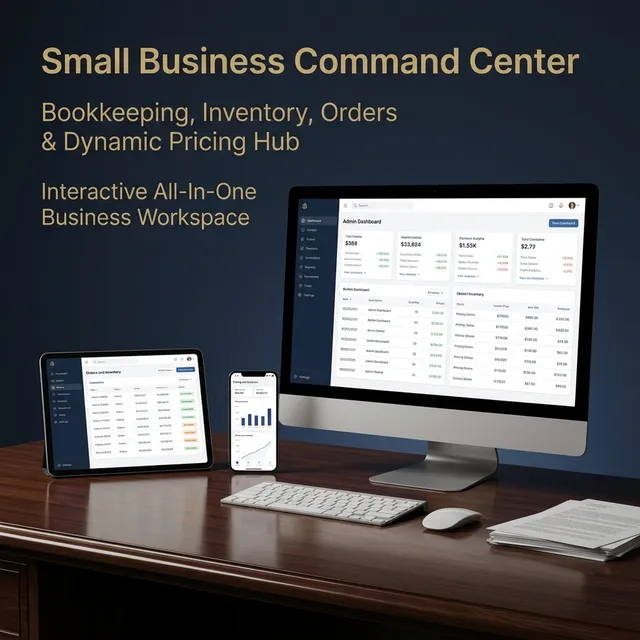
Small Business Command Center & Inventory Bookkeeping
Track what you make, what it costs, who ordered and what you earn, all in one place built for makers, small shops and online sellers.
$29$23.20$29₫629,000₫503,000₫629,000
 Save 20%
Agency Business OS — Clients, Projects & Invoices Dashboard
Keep every client, project and invoice of your agency in one place and see at a glance who owes you money and what is due next.
$39$31.20$39₫849,000₫679,000₫849,000
 Save 20%
Habit Tracker & Streak Planner — Habit Stacking, 75-Day Challenges & Dopamine Reset
A habit tracker web app that links daily check-ins, streaks, habit stacks, challenges and urge logs, so you can see which habits are holding and which are slipping.
$27.99$22.39$27.99₫609,000₫487,000₫609,000
How readers changed with these practices
For more than 8 years, a community of over 2,400,000 followers and 38,000+ students has shared how these daily practices helped in love, money and inner calm.
 Love story
Twin Flame Journal Results: Real Stories & Daily Practice
Does a twin flame journal work? Real stories of healing after breakups, calling in a soulmate and finding calm, plus how the daily practice looks.
Read guide Money story
Money Manifestation Journal Results: Real Stories
Does a money manifestation journal work? Real stories of paying off debt, asking for a raise and easing money anxiety, plus the daily practice.
Read guide
 Love story
Manifest After a Breakup: Real Healing Stories
Real stories of manifesting after a breakup: how people used self-love affirmations, mirror work and a love journal to heal and open up again.
Read guide Money story
Manifest Debt Free: Real Stories of Steady Progress
Real stories of manifesting a debt-free life: money affirmations and an abundance journal paired with a clear goal, a deadline and daily evidence.
Read guide Love story
Manifest Your Soulmate: Real Stories That Started Within
Real stories of manifesting a soulmate: how people wrote an Ideal Partner Script, built a vision board and said yes to life before love arrived.
Read guide Money story
Manifest a Raise: Real Stories of Asking With Confidence
Real stories of manifesting a raise or promotion: clearing money blocks, practising confidence affirmations and logging proof before asking.
Read guide Love story
Twin Flame Reunion Stories: Real Journeys to Peace
Real twin flame reunion stories: how people used journey stages, a signs log and guided meditation to find peace during separation, together or apart.
Read guide Money story
Money Anxiety to Money Calm: Real Stories
Real stories of easing money anxiety: a short guided meditation before checking accounts, a weekly money date and a gentle look at old beliefs.
Read guide
More Guides in This Topic
View all (15) →Mark Cuban Shark Tank Productivity Rules: Business Success
Master Mark Cuban's Shark Tank productivity rules. Discover the effort metric, asynchronous email discipline, and ruthless business decision frameworks.
Read guide
What is Founder Mode? Brian Chesky Operations Guide
Discover what Founder Mode is, how Brian Chesky operates Airbnb, why traditional manager mode fails, and how to run a high-craft flat organization.
Read guide
Charlie Munger Mental Models & Inversion Guide
Master Charlie Munger's multi-disciplinary mental models lattice, the fatal inversion thinking principle, and weighted executive decision matrices.
Read guide
The 10X Rule Grant Cardone: Massive Action & Goal Guide
Master Grant Cardone's 10X Rule: 10X goal-setting, the 4 degrees of action, overcoming fear of rejection, and daily execution architectures.
Read guide
Go deeper: guide series on this topic
Each series answers one question across many cases, such as every angel number in love or every zodiac pair.

Mental Models for Real Situations
Mental models are cognitive representations of how things work in the real world, providing executive frameworks to deconstruct high-stakes decisions and eliminate behavioral blindspots.
120 guidesFrom the blog
Latest articles




Trending now
What readers are opening this week
Ranked by real visits over the last 7 days.




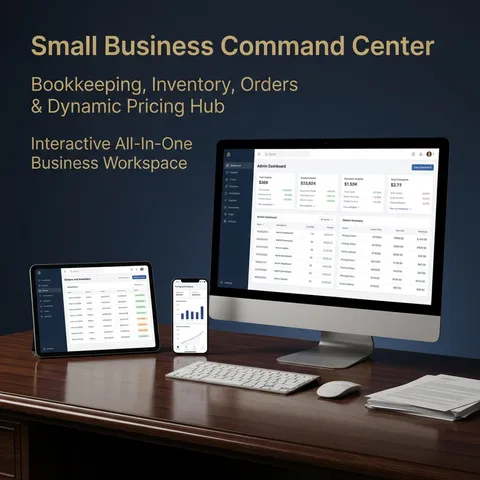
Small Business Command Center & Inventory Bookkeeping
Track what you make, what it costs, who ordered and what you earn, all in one place built for makers, small shops and online sellers.
Get Your Free 2027 Angel Number Year Map
Enter your birthday to reveal your 2027 Personal Year, the angel number guiding each month, and a private workspace to set your intentions.
Follow along
Daily rituals on your feed
Short guides, moon rituals and planner walkthroughs from Yin Yang Masters.




Keep exploring
More from Yin Yang Masters




Ask Yinyang Masters inside your AI assistant
Get the same calculations and guidance right in your chat: add the free Yinyang Masters app, then ask in plain English. No account needed.
Try asking: “Find a Yinyang Masters guide about starting a daily spiritual practice.”

Meet Moon Keeper, our live altar host
Every hour Moon Keeper reads the sky, draws one tarot card and shares a calm 3-minute reflection. Drop by the altar, follow the hourly diary and leave a note in the guestbook.

Get the Yin Yang Masters Letter Every Day
One short email a day: a practice for today, a real reader story, and the newest guide on love, money and inner calm.
For more than 8 years, a community of over 2,400,000 followers and 38,000+ students has shared how these daily practices helped in love, money and inner calm.