




The 10X Rule Book: Massive Action vs Average Effort Framework
The 10X Rule book establishes that achieving outsized success requires setting targets ten times larger than conventional goals and deploying ten times the standard volume of effort. By multiplying daily outbound execution by a factor of ten, professionals reprogram their reticular activating system, shatter risk aversion, and insulate their careers against economic volatility.
In modern professional and entrepreneurial landscapes, the prevailing assumption is that moderate competence and cautious pacing yield stable, predictable progress. However, as examined in our strategic analysis of Grant Cardone's 10X Rule massive action guide, operating with average expectations exposes individuals and businesses to catastrophic vulnerabilities whenever sudden market shifts, technological disruptions, or economic downturns emerge. Published by sales strategist and real estate investor Grant Cardone, The 10X Rule: The Only Difference Between Success and Failure dismantled conventional goal-setting by exposing the systemic miscalculation behind most unfulfilled ambitions: the dramatic underestimation of the sheer effort required to achieve any meaningful breakthrough.
Most professionals fail not because their conceptual vision lacks merit, but because they plan for optimal conditions rather than systemic friction. When an obstacle arises, an average operating volume of effort quickly evaporates into burnout and compromise. By shifting from standard linear effort to a 10X multiplier, high performers build an insurmountable operational moat. Below, we break down the core philosophical thesis of the 10X Rule book, diagnose the four operational degrees of human action, critically evaluate sustainable implementation frameworks without burnout, and provide an actionable daily execution checklist.
The Core Philosophy of The 10X Rule Book: Why Average Effort Guarantees Failure
The philosophical foundation of the 10X framework rests upon a brutal truth of competitive dynamics: average effort is an illusion of security that guarantees long-term mediocrity and systemic vulnerability. In classical business literature, executives are routinely encouraged to set safe, incremental key performance indicators that guarantee modest annual improvements. Cardone challenges this dogma by demonstrating that conservative goals fail to ignite human passion, attract world-class talent, or create the emotional momentum necessary to persevere through inevitable economic turbulence.
To implement the 10X mindset effectively, one must distinguish between two interdependent operational components:
- 10X Target Thinking: Establishing objectives that are an order of magnitude larger than standard benchmarks. If your market peer aims to sign ten new corporate clients this quarter, a 10X target demands acquiring one hundred. This radical expansion forces your cognitive architecture to abandon incremental tweaks and invent entirely new distribution channels, operational leverage, and team capabilities.
- 10X Action Velocity: Unleashing an overwhelming volume of outbound execution, client follow-up, content publishing, and pipeline generation. When unexpected hurdles, supply chain bottlenecks, or client cancellations strike, a business operating at a 1X baseline collapses, whereas a venture driven by 10X velocity absorbs the disruption seamlessly.
"Operating at average capacity is a silent risk; when unexpected market turbulence arrives, average effort lacks the reserve momentum needed to survive."
From a behavioral psychology perspective, setting extreme goals activates the brain's reticular activating system (RAS). The RAS acts as a neurological filter that determines which environmental cues enter conscious awareness. When you commit to a 10X target, your cognitive filters immediately deprioritize petty office distractions and surface hidden commercial opportunities that remain completely invisible to competitors who settle for average results. To anchor this cognitive expansion without feeling overwhelmed, high performers often link their ambitious goals to foundational morning routines by learning how to habit stack daily routines for sustained momentum.
The Four Degrees of Action: Diagnosing and Upgrading Your Execution Velocity
A central diagnostic contribution of the 10X Rule book is the classification of human activity into four distinct tiers. Every individual, team, and organization operates primarily within one of these four operational degrees at any given moment. Honest self-diagnosis is the essential prerequisite for breakthrough performance:
- Degree 1: Do Nothing (Apathy & Passive Resignation). Individuals operating in the first degree have surrendered their personal agency. They show up to their desks, expend the bare minimum cognitive energy to avoid termination, and wait passively for instructions. While this state appears low-effort on the surface, it generates immense subconscious anxiety and chronic financial vulnerability.
- Degree 2: Retreat (Fear-Driven Avoidance). Those in the second degree actively pull back from opportunity. Having experienced prior setbacks, public critique, or career disappointment, they rationalize hesitation and risk aversion as prudence. They spend hours polishing internal slide decks rather than making outbound prospect calls, hiding behind administrative busywork to protect their fragile self-esteem.
- Degree 3: Normal Action (The Average Trap). The third degree is by far the most deceptive and pervasive state in corporate society. Normal action represents the prevailing standard of average competence: working forty hours a week, sending a handful of emails, and meeting baseline quotas. Cardone identifies Degree 3 as the most dangerous tier because society actively validates it. When inflation surges, industries automate, or recessions arrive, average workers are the first to experience devastating layoffs because they built zero reserve capacity.
- Degree 4: Massive Action (The 10X Operating Standard). The fourth degree is characterized by overwhelming, relentless execution that alters market realities. When you deploy massive action, you do not merely participate in a category; you dominate it. You initiate so many client contacts, publish so much value-driven media, and follow up so persistently that your presence becomes ubiquitous.

To visualize the operational chasm between conventional pacing and the fourth degree of action, examine the comparative matrix below:
Operational Audit: 1X Average Effort vs. 4th Degree 10X Massive Action
| Operational Dimension | 1X Normal Action (Average Trap) | 4th Degree 10X Massive Action | Neurological & Behavioral Driver | 90-Day Compounded Output |
|---|---|---|---|---|
| Outbound Pipeline Generation | 2–3 prospect touches per day; highly sensitive to mild client pushback. | 25–40 diversified touches per day across phone, email, and social messaging. | Desensitization to rejection; re-anchoring of behavioral fear thresholds. | 10X larger qualified pipeline; immunity to individual deal dropouts. |
| Response to Obstacles | Hesitates, seeks reassurance, and delays launch until conditions feel safe. | Treats friction as immediate tactical feedback; increases output volume. | Dopaminergic reward shifting from outcome validation to execution velocity. | Rapid iterative feedback loops; problems resolved before peers notice them. |
| Economic Resilience | Operates with single revenue source and zero operational buffer. | Builds multi-channel redundancies and substantial reserve capital reserves. | Proactive risk mitigation driven by radical personal accountability. | Capacity to absorb macro-economic volatility without downsizing goals. |
| Market Visibility | Quiet, modest presence; easily forgotten by busy prospective partners. | Omnipresent, multi-platform thought leadership and consistent outreach. | Overcoming the fear of taking up space; relentless value broadcasting. | Recognized as the default category authority in their target niche. |
| Energy & Stamina Management | Suffers from chronic emotional fatigue born of stagnation and hesitation. | Experiences heightened momentum derived from tangible progress and wins. | Neurological alignment: high clarity eliminates executive decision fatigue. | Sustained psychological resilience and infectious team-wide enthusiasm. |
Critical Review of The 10X Rule Book: High-Impact Strengths and Burnout Prevention
While Cardone's thesis offers an indispensable antidote to corporate complacency, an objective critical review reveals both profound operational strengths and significant psychological hazards if misapplied. The most frequent criticism levied against the 10X Rule is that it advocates an unsustainable, chaotic hustle culture that inevitably culminates in adrenal fatigue, relationship strain, and eventual nervous system collapse.
This critique is valid when massive action is misinterpreted as reckless overwork. Working eighty hours a week answering reactive emails or attending redundant status meetings is not 10X action; it is merely exaggerated 1X inefficiency. True 10X execution is about asymmetric leverage, disciplined prioritization, and radical clarity of purpose. Rather than exhausting yourself through chaotic multitasking, top operators leverage modern asynchronous frameworks like Justin Welsh's LinkedIn content flywheel architecture, demonstrating how high-volume output can be systematically engineered in just two focused hours per day.
"Massive action does not mean chaotic endless overwork; it means deploying concentrated bursts of extreme focus while maintaining strict boundaries for recovery."
To harness the undeniable power of the 10X Rule without sacrificing your well-being, integrate these two essential psychological boundaries:
- The 5-Minute Container Protocol: When confronting intimidating 10X tasks—such as cold outreach campaigns or complex strategic proposals—the subconscious mind frequently triggers defensive procrastination. By establishing a non-negotiable 5-minute container, you commit to taking immediate, imperfect physical action for exactly three hundred seconds. This brief sprint bypasses the amygdala's threat response, initiating state change and effortless flow.
- The Action-Then-Release Routine: A common trap among driven achievers is the compulsive need to monitor metrics obsessively after deploying an outreach campaign. This creates chronic nervous system vigilance. Under the Action-Then-Release protocol, you execute your massive action sprint with absolute intensity, and the moment the designated time block concludes, you physically close your workstation, step outside, or engage in deep diaphragmatic breathing. You surrender psychological attachment to immediate outcomes, trusting the mathematical certainty of compounded effort.
The 10X Rule Summary: Establishing Daily Operational Momentum
Translating the high-octane philosophy of the 10X Rule book into durable daily routines requires clear operational scaffolding. Below is a structured five-step daily operating protocol designed to anchor massive execution into your calendar:
- Morning Target Re-anchoring (First 15 Minutes): Before glancing at email notifications or social feeds, open a physical notebook and handwrite your core 10X objectives in the present tense, as if they are already accomplished facts. Re-writing your ambitions daily cements them into your subconscious operating system.
- The Deep Work Outbound Sprint (90 Minutes): Protect the earliest portion of your workday for pure outbound production. Dedicate ninety uninterrupted minutes to client outreach, strategic proposals, or core creative output before engaging in reactive administrative communication.
- Reframing Fear as a Directional Compass: Whenever you feel somatic resistance, nervous butterflies, or hesitation regarding a high-stakes call or bold proposal, recognize that sensation as an indicator of growth. In the 10X philosophy, fear does not mean retreat; it indicates the exact doorway you must walk through immediately.
- Cultivating Omnipresence: Do not hoard your insights in quiet humility. Share your learnings, case studies, and perspectives across digital channels consistently. Being known and trusted across your industry is the single greatest insurance policy against sudden economic shifts.
- Evening Execution Audit & Reset: At the close of each working day, conduct a five-minute review of your actual output versus your 10X targets. Avoid emotional self-judgment; simply treat your calendar as a lab experiment. Note where hesitation stalled momentum, recalibrate your targets, and outline your top execution blocks for the following morning.
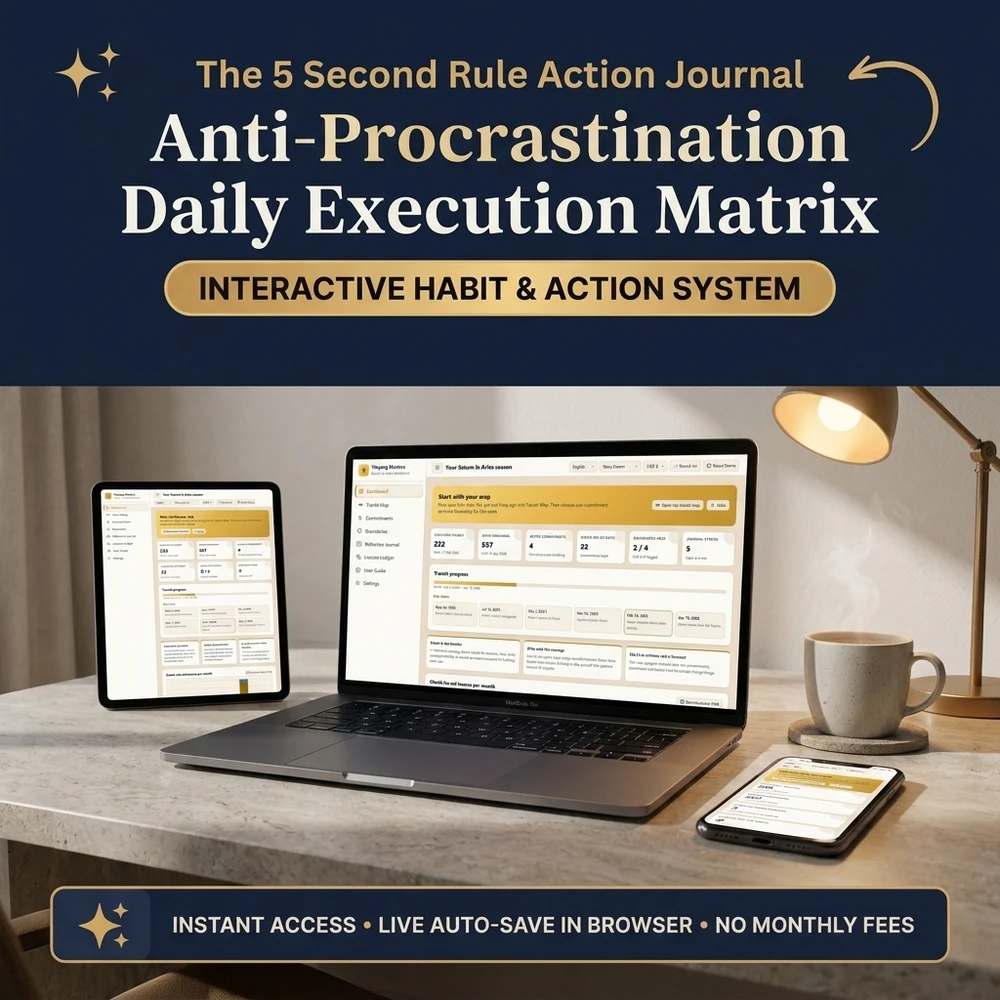
To eliminate daily friction and track these high-velocity commitments systematically, many professionals employ physical execution systems such as the 10X massive action daily planner matrix, which organizes daily schedules into discrete 10X target milestones and accountability checkpoints without unnecessary digital clutter.
Ultimately, The 10X Rule by Grant Cardone is far more than a conventional business handbook; it is a profound cognitive operating system. By demanding tenfold ambition and tenfold action, it strips away self-pity, dismantles the myth of scarcity, and empowers you to command your destiny with unapologetic clarity and calm, relentless resolve.