

4-Day Work Week Schedule Model: Company Trials and Capacity Planning Guide

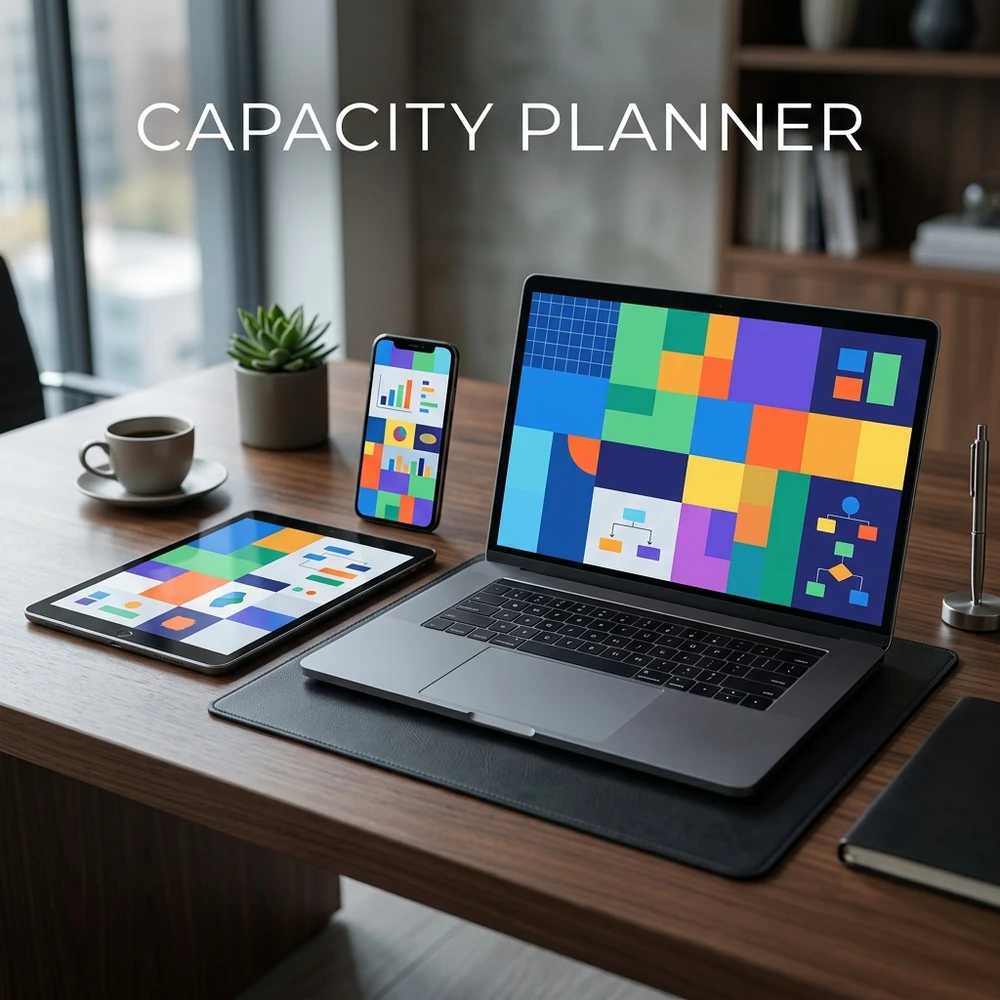
The 4-day work week companies model operates on the 100-80-100 principle: employees receive 100% of their baseline compensation for 80% of traditional work hours, provided 100% of baseline productive output is maintained. Successfully transitioning to a compressed 32-hour schedule requires ruthless elimination of bureaucratic meeting bloat, automated asynchronous documentation, and rigorous team capacity modeling.

Want to go further with this result?
Your free 2027 Angel Number Year Map
Enter your birthday to see your 2027 Personal Year and the angel number for each month, with space to write your intentions.
You just tried the quick preview. Open the full browser web app to save private entries on your device, listen to guided audio, and track daily progress.
- Open in 10s
- Saved on your device · $0 monthly
- EN · VI · ZH included
Quick answers
For over a century, the standard five-day, 40-hour work week has governed corporate commerce. Established during the Industrial Era to regulate assembly line manufacturing, this legacy framework treats human knowledge output as a linear function of seated desk time. In our modern knowledge, software, and creative economies, intellectual fatigue degrades cognitive output exponentially after several hours of continuous focus. Global empirical trials conducted across the United Kingdom, the United States, Germany, and South Africa demonstrate that shortening the work week decreases employee burnout by over 65% while preserving or elevating total enterprise revenue.
However, moving from aspirational vision to operational execution requires meticulous organizational architecture. Companies cannot simply slice off Friday without re-engineering operational workflows, customer coverage rotations, and meeting habits.
1. The Macroeconomic Transition: The 100-80-100 Operating Principle
The global movement spearheaded by 4 Day Week Global and independent corporate pioneers is an efficiency thesis rooted in Parkinson's Law. By reducing working hours while holding compensation and output constant, enterprises eliminate bureaucratic friction and unlock superior employee focus.

- The Core Equation: 100% Compensation for 80% Work Hours in exchange for 100% Productivity Output.
- Empirical Trial Outcomes: In the world’s largest coordinated trial involving 61 UK organizations, 92% of participating companies elected to continue the 4-day policy permanently, citing an average 35% jump in reported revenue compared to historical periods.
- Talent Attraction and Retention Moats: Enterprises offering verified 32-hour schedules observe dramatic reductions in voluntary turnover (down 57%) and a surge in tier-one candidate applications, effectively lowering executive recruitment expenses.
Designing fair shift allocations and calculating departmental coverage is complex. The 4-Day Work Week Team Capacity Planner equips leadership with an automated model for balancing departmental output and project delivery timelines.
Get Your Free 2027 Angel Number Year Map
Enter your birthday to reveal your 2027 Personal Year, the angel number guiding each month, and a private workspace to set your intentions.
2. Structural Scheduling Frameworks: Choosing Your 4-Day Model
Depending on customer interface requirements and client service level agreements (SLAs), organizations implement one of four distinct scheduling archetypes:
- The Coordinated Company-Wide Shutdown: The entire enterprise operates Monday through Thursday and closes completely on Friday. Ideal for internal development shops, software engineering agencies, and consultancies where external customer support can be paused or handled via automated escalation trees.
- The Staggered Team Rotation (Gold / Silver Teams): Departmental staff are split into alternating cohorts (Team A: Monday–Thursday; Team B: Tuesday–Friday). This ensures continuous five-day business responsiveness without subjecting individual knowledge workers to 40 hours of fatigue.
- The Distributed Flex Schedule: Individual employees select their designated weekday off in coordination with cross-functional pairing partners, maintaining comprehensive internal redundancy.
- Seasonal / Summer Compression: Implementing 32-hour weeks during historically quiet quarters to pilot cultural adaptability and refine asynchronous communication rituals.
For organizations balancing both remote flexibility and in-office presence requirements, integrate the Hybrid & Remote Work Schedule Tracker to monitor presence benchmarks without intrusive surveillance.
3. The Mathematics of Eliminating Meeting Bloat and Friction
To reclaim the eight hours surrendered by moving to a 32-hour work week, management must audit company communication channels:
- The Status Update Ban: Eliminate live status check-in meetings. Replace them with structured written updates submitted asynchronously via team dashboards before 09:00 AM on active work days.
- Aggressive Time-Boxing: Default calendar meeting durations should be reduced from 60 minutes to 25 minutes, and 30 minutes to 15 minutes. Meetings with more than four attendees must mandate a circulated one-page memo prior to discussion.
- Deep Work Focus Blocks: Establish enterprise-wide "Focus Mornings" (e.g., 09:00 AM to 12:00 PM Tuesday through Thursday) during which internal Slack messaging, emails, and meetings are strictly prohibited.
Operational leaders can structure their focus windows using the Executive Daily Planner & Priority Matrix to insulate critical priorities from everyday distractions.
4. Operational Guardrails: Preventing Hidden Burnout and Work Creep
A frequent pathology in poorly planned implementations is "compressed week burnout"—where employees work intense 10-hour days Monday through Thursday, resulting in heightened exhaustion rather than rejuvenation:
- Differentiating 4x8 (32 Hours) from 4x10 (Compressed 40 Hours): The true 4-day work week model requires an absolute reduction in working hours to 32 hours, not packing 40 hours into four grueling days.
- Guardrails Against Weekend Slack Intrusion: Establish automated "Do Not Disturb" protocol policies that silence notifications between Thursday 06:00 PM and Monday 08:00 AM.
- Asynchronous Knowledge Architecture: Document all key standard operating procedures (SOPs) in a central digital knowledge base so that project momentum is never held hostage by an individual's scheduled day off.
Individual contributors and team leads can maintain peak personal productivity through structured daily intervals with the Time-Blocking Daily Planner.
5. Comparative Evaluation: Standard 5-Day vs. 4x10 vs. True 32-Hour Model
Analyzing the systemic tradeoffs across competing operational frameworks demonstrates why the 32-hour schedule yields superior business outcomes:
| Operational Dimension | Standard 5-Day (40 Hours) | Compressed 4x10 (40 Hours) | True 32-Hour 4-Day Model |
|---|---|---|---|
| Weekly Target Hours | 40 hours | 40 hours | 32 hours |
| Daily Cognitive Load | 8 hours / day | 10 hours / day (severe fatigue) | 8 hours / day (sharp focus) |
| Meeting Culture | Bloated, routine status calls | Often compressed without reduction | Ruthlessly streamlined, async-first |
| Employee Burnout Rate | Baseline high (40–50% reported) | Moderate-High (long daily shifts) | Lowest (-65% drop in trials) |
| Enterprise Output | Diluted by Parkinson's Law | Diminishing returns on hours 9–10 | High velocity, zero busywork |
| Turnover & Retention | Average industry churn | Moderate improvement | Best-in-class retention moats |
| Primary Toolset | Fragmented legacy spreadsheets | Manual punch cards | 4-Day Work Week Team Capacity Planner |
Strategic Topic Frameworks & Practical Connections
To deepen your practical mastery and build an integrated operational workflow within this topic, explore these complementary guides:
- Implement the execution protocols in AI Fatigue at Work: Why AI Tools Are Adding to Burnout and a Workflow System That Fixes It to systematically strengthen your foundational routine.
- Explore the strategic principles detailed in Jobs AI Can't Replace: Building an Irreplaceable Human Moat and Career Roadmap for advanced optimization and mental clarity.
- Apply the structured methods from Amazon 5-Day RTO Survival Guide & Coffee Badging Framework to maintain long-term momentum and consistency.
7. Conclusion: The Competitive Advantage of Sovereign Time
The transition toward a four-day work week is not a concession to employee complacency; it is a hard-nosed competitive strategy designed to purge organizational waste and empower high-performing talent.
As artificial intelligence automates routine correspondence and administrative tasks, human cognitive value will be judged by the depth of creative insight and strategic decision-making rather than physical desk presence. Organizations that master team capacity modeling and embrace the 32-hour operating model today will command the most capable, energized, and loyal workforces of the coming decade.
Cross-referenced research signals for deeper decision clarity.
Deep structural telemetry tracking workforce productivity shifts, employment participation rates, and macroeconomic yield curves.
Frequently Asked Questions
Leading global companies including Kickstarter, Buffer, Bolt, Panasonic, and hundreds of tech and service firms have permanently instituted 32-hour or 4-day work weeks, reporting sustained productivity and unprecedented employee retention.

Topic Pillar
Career Path & Mindful Work
Practical advice for navigating career changes, recovering from burnout, and building independent, fulfilling work.
Tools featured in this guide
 Save 20%
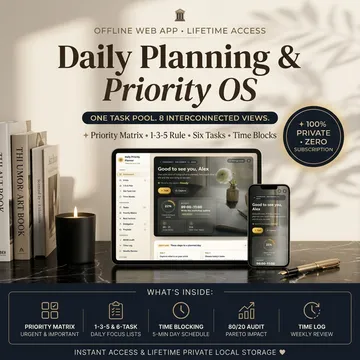
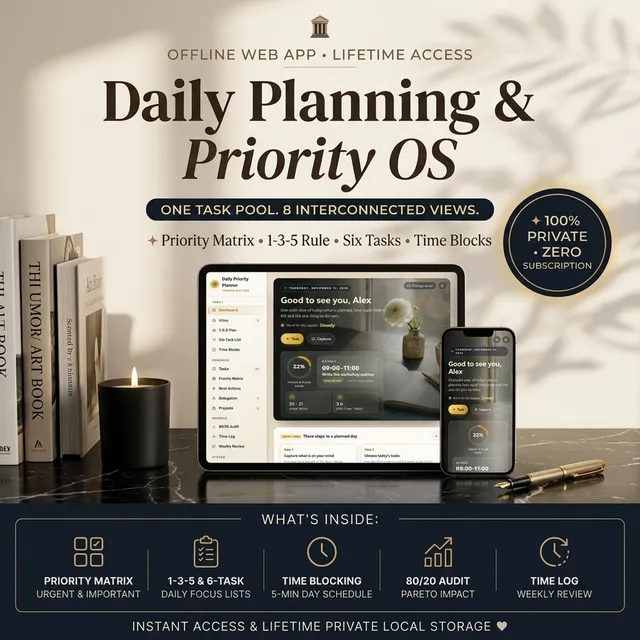
Daily Priority Planner — Time Blocking, Eisenhower Matrix & Task Manager
One task list shown as a priority matrix, a 1-3-5 plan, a six-task list and a time-blocked day, so you always know what to do next.
$27.99$22.39$27.99₫609,000₫487,000₫609,000
 Save 20%
Small Business Command Center & Inventory Bookkeeping
Track what you make, what it costs, who ordered and what you earn, all in one place built for makers, small shops and online sellers.
$29$23.20$29₫629,000₫503,000₫629,000
How readers changed with these practices
For more than 8 years, a community of over 2,400,000 followers and 38,000+ students has shared how these daily practices helped in love, money and inner calm.
 Love story
Twin Flame Journal Results: Real Stories & Daily Practice
Does a twin flame journal work? Real stories of healing after breakups, calling in a soulmate and finding calm, plus how the daily practice looks.
Read guide Money story
Money Manifestation Journal Results: Real Stories
Does a money manifestation journal work? Real stories of paying off debt, asking for a raise and easing money anxiety, plus the daily practice.
Read guide
 Love story
Manifest After a Breakup: Real Healing Stories
Real stories of manifesting after a breakup: how people used self-love affirmations, mirror work and a love journal to heal and open up again.
Read guide Money story
Manifest Debt Free: Real Stories of Steady Progress
Real stories of manifesting a debt-free life: money affirmations and an abundance journal paired with a clear goal, a deadline and daily evidence.
Read guide Love story
Manifest Your Soulmate: Real Stories That Started Within
Real stories of manifesting a soulmate: how people wrote an Ideal Partner Script, built a vision board and said yes to life before love arrived.
Read guide Money story
Manifest a Raise: Real Stories of Asking With Confidence
Real stories of manifesting a raise or promotion: clearing money blocks, practising confidence affirmations and logging proof before asking.
Read guide Love story
Twin Flame Reunion Stories: Real Journeys to Peace
Real twin flame reunion stories: how people used journey stages, a signs log and guided meditation to find peace during separation, together or apart.
Read guide Money story
Money Anxiety to Money Calm: Real Stories
Real stories of easing money anxiety: a short guided meditation before checking accounts, a weekly money date and a gentle look at old beliefs.
Read guide
More Guides in This Topic
View all (10) →Amazon 5-Day RTO Guide: Coffee Badging & Hybrid Rules
Master the Amazon 5-day return-to-office mandate. Learn coffee badging survival tactics, badge tracking spreadsheets, and hybrid schedule management.
Read guide
Dan Koe One-Person Business: 2-Hour Writing Routine
Master Dan Koe's one-person business model. Learn the 2-hour daily writing routine, content ecosystem architecture, and solopreneur monetization.
Read guide
Conscious Unbossing Meaning & Individual Contributor Roadmap
What conscious unbossing means, why middle management is shrinking, and a practical individual contributor roadmap for flat organizations.
Read guide
AI Fatigue at Work: Symptoms, Causes & a Workflow Fix
Why AI tools add to workload and burnout, the warning signs of AI fatigue, and a simple delegation and review system to get your time back.
Read guide
From the blog
Latest articles




Trending now
What readers are opening this week
Ranked by real visits over the last 7 days.
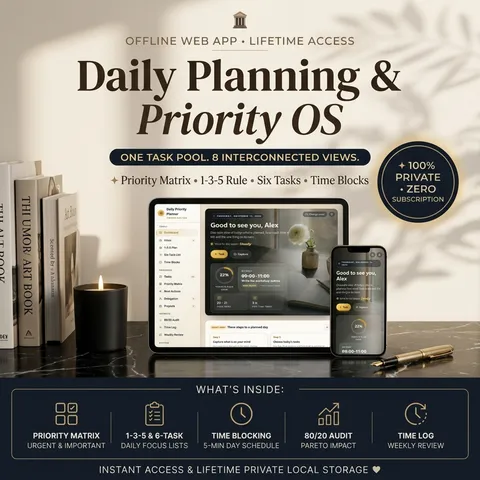
Daily Priority Planner — Time Blocking, Eisenhower Matrix & Task Manager
One task list shown as a priority matrix, a 1-3-5 plan, a six-task list and a time-blocked day, so you always know what to do next.
Get Your Free 2027 Angel Number Year Map
Enter your birthday to reveal your 2027 Personal Year, the angel number guiding each month, and a private workspace to set your intentions.
Follow along
Daily rituals on your feed
Short guides, moon rituals and planner walkthroughs from Yin Yang Masters.




Keep exploring
More from Yin Yang Masters



Ask Yinyang Masters inside your AI assistant
Get the same calculations and guidance right in your chat: add the free Yinyang Masters app, then ask in plain English. No account needed.
Try asking: “Find a Yinyang Masters guide about starting a daily spiritual practice.”

Meet Moon Keeper, our live altar host
Every hour Moon Keeper reads the sky, draws one tarot card and shares a calm 3-minute reflection. Drop by the altar, follow the hourly diary and leave a note in the guestbook.

Get the Yin Yang Masters Letter Every Day
One short email a day: a practice for today, a real reader story, and the newest guide on love, money and inner calm.
For more than 8 years, a community of over 2,400,000 followers and 38,000+ students has shared how these daily practices helped in love, money and inner calm.