


Third Eye Chakra Meaning: Ajna Explained, Plus a 10-Minute Practice
The third eye chakra meaning comes down to one word: Ajna, Sanskrit for "command" or "to perceive." It is the sixth of the seven main chakras, placed between the eyebrows, and it stands for insight, intuition and clear inner seeing. Traditions link it with the color indigo and the seed sound "Om," and a calm 10-minute practice is enough to work with it.
If you searched for the third eye chakra meaning, this guide gives you the short answer first, then the location, the symbolism and the difference from the crown chakra. It sits beside our full third eye opening symptoms guide, which covers the pineal gland and what to watch for during practice.
Here the third eye is treated as a contemplative idea and a focus point for attention, not a medical organ and not a promise of special powers. That framing keeps the practice useful and keeps your expectations honest.
Third Eye Chakra Meaning: What Ajna Stands For
Ajna (also written Anja) is the sixth chakra in the classical Hindu and yogic system, and the name translates as "command" in the sense of a guiding order from inner wisdom. In practice the word points to three ideas that show up again and again in the tradition.
"The third eye chakra is the point of attention between the eyebrows that traditions use to stand for insight: seeing a situation as it is, not as fear describes it."
| Idea | What it means in plain words | Everyday example |
|---|---|---|
| Insight | Seeing patterns under the surface | Noticing the same argument repeats every Sunday night |
| Intuition | A quiet gut-level read you can test | Feeling uneasy about a deal, then checking the terms |
| Clarity | Thinking without emotional static | Making a decision after a 10-minute pause, not in the heat of it |
The symbolism is consistent across sources: a lotus with 2 petals (often read as the two sides of the mind meeting), the color indigo, and the seed sound "Om." Encyclopaedia Britannica describes chakras as centers in a subtle-body map used in yoga and tantra, which is the right level of claim for this idea: a map for practice, not a measured anatomy.
Where the Third Eye Chakra Sits and What It Governs
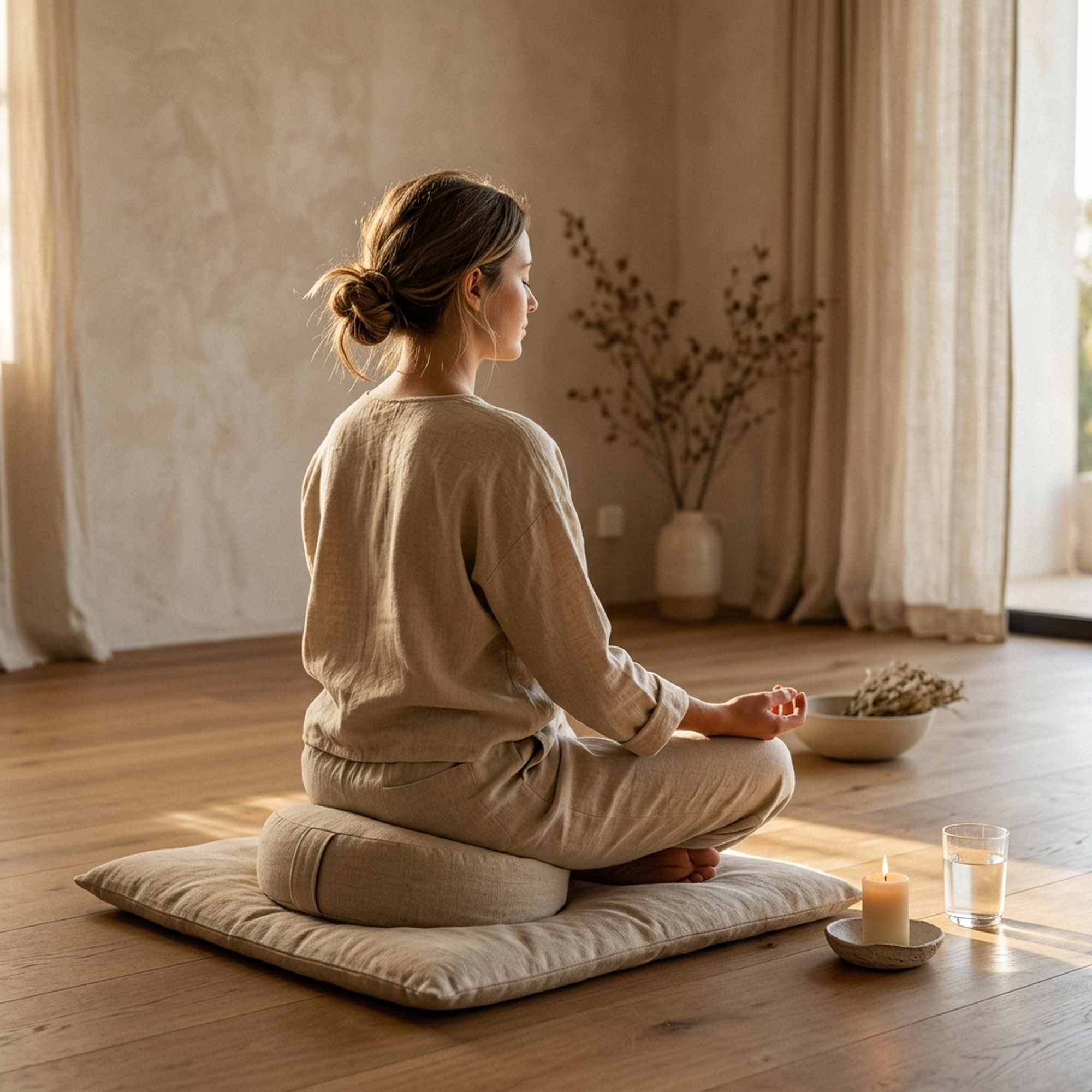
Most teachers place Ajna on the forehead, about 1 finger-width above the line between the eyebrows, with its inner focus point behind the forehead. That makes it the sixth of 7 main chakras counting from the base of the spine, one step below the crown at the top of the head.
In this map the sixth chakra "governs" attention, imagination, memory for patterns and the sense of inner direction. People describe a balanced Ajna as steady focus and a calm mind, and an unbalanced one as scattered thinking, overthinking or doubting every instinct. Those are descriptions of experience, so treat them as prompts for self-observation.
The idea is often linked to the pineal gland, a small gland that produces melatonin and responds to light and darkness. A 2018 review in the journal Molecules covers how pineal calcification relates to melatonin output and aging. That is real physiology, but it is separate from the chakra map, and neither source shows that a chakra opens or closes. Keep the two ideas side by side without merging them.
A useful way to read all this: Ajna is a label for the skill of paying quiet attention, and that skill is trainable. Researchers who study mindfulness measure it in minutes of daily practice and in weeks of consistency, not in mystical events.