Methodology & Archetypal Tarot Architecture
Tarot divination is not deterministic fortune-telling; rather, it functions as a visual mirror reflecting subconscious energetic vectors. Pioneering Swiss psychoanalyst Carl Gustav Jung identified Tarot as a profound symbolic catalog of the collective unconscious, operating via the principle of acausal meaningful coincidence (Synchronicity).
The 78 Cards: The Fool’s Journey and Elemental Suits
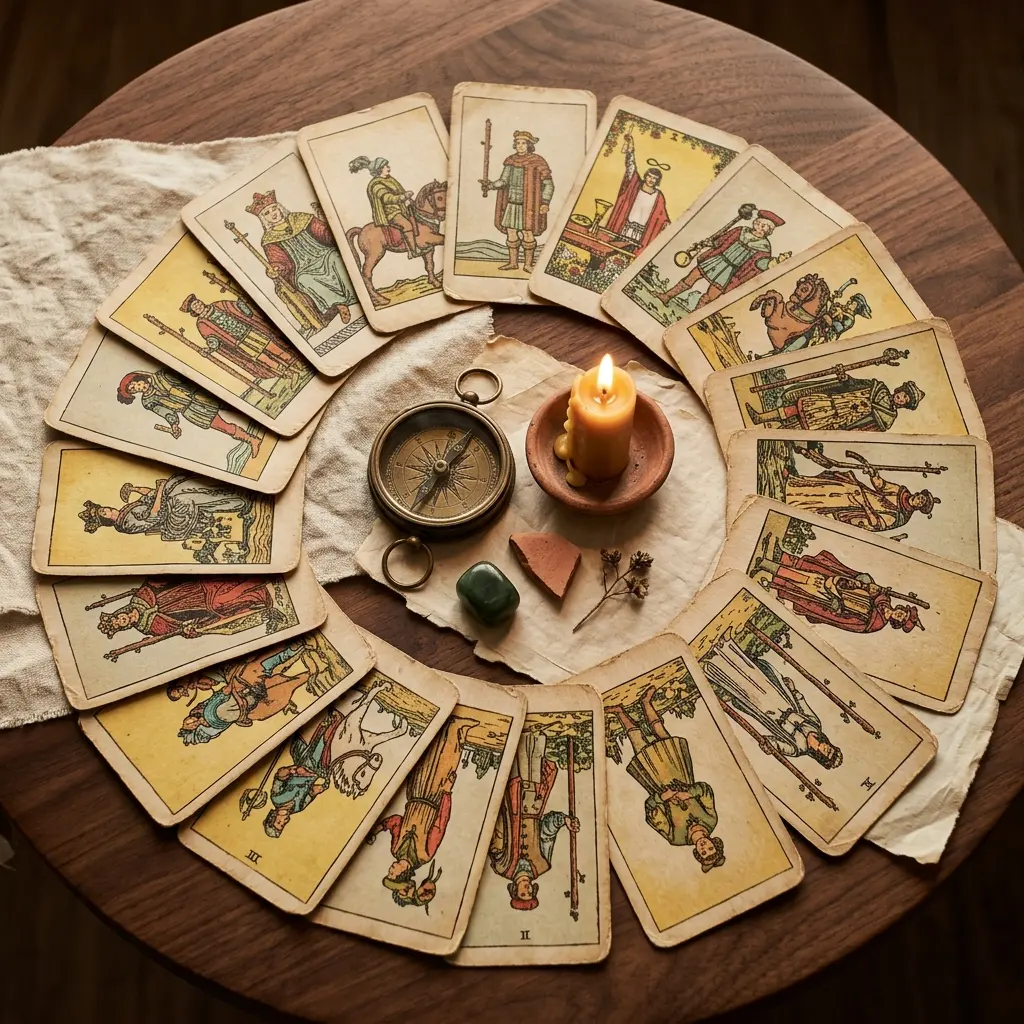
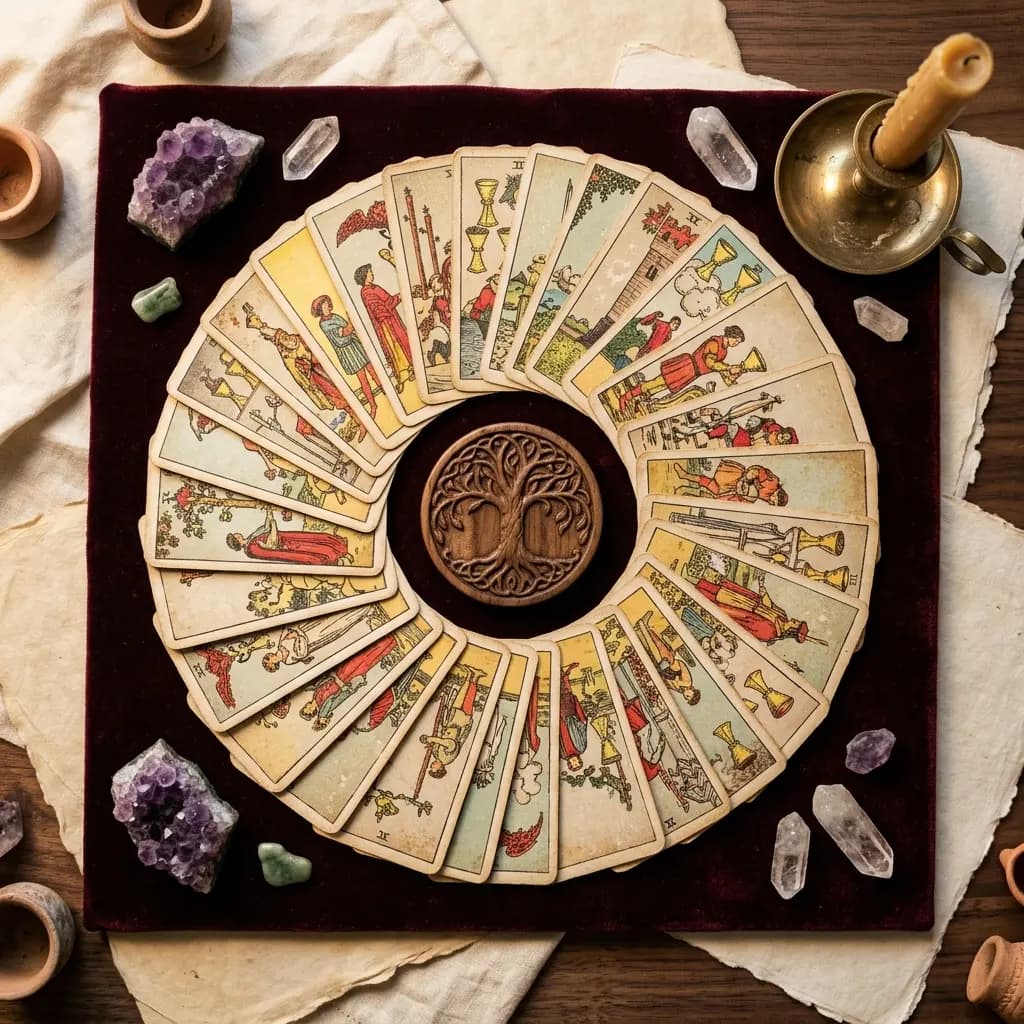
The sacred deck divides into 22 Major Arcana—depicting macro-spiritual milestones from The Fool (pure innocence) to The World (cosmic individuation)—and 56 Minor Arcana across four elemental domains: Wands (Fire / Creative Passion), Cups (Water / Emotional Intuition), Swords (Air / Intellect & Perception), and Pentacles (Earth / Material Manifestation).
Single-Card Focus and Three-Card Temporal Spreads
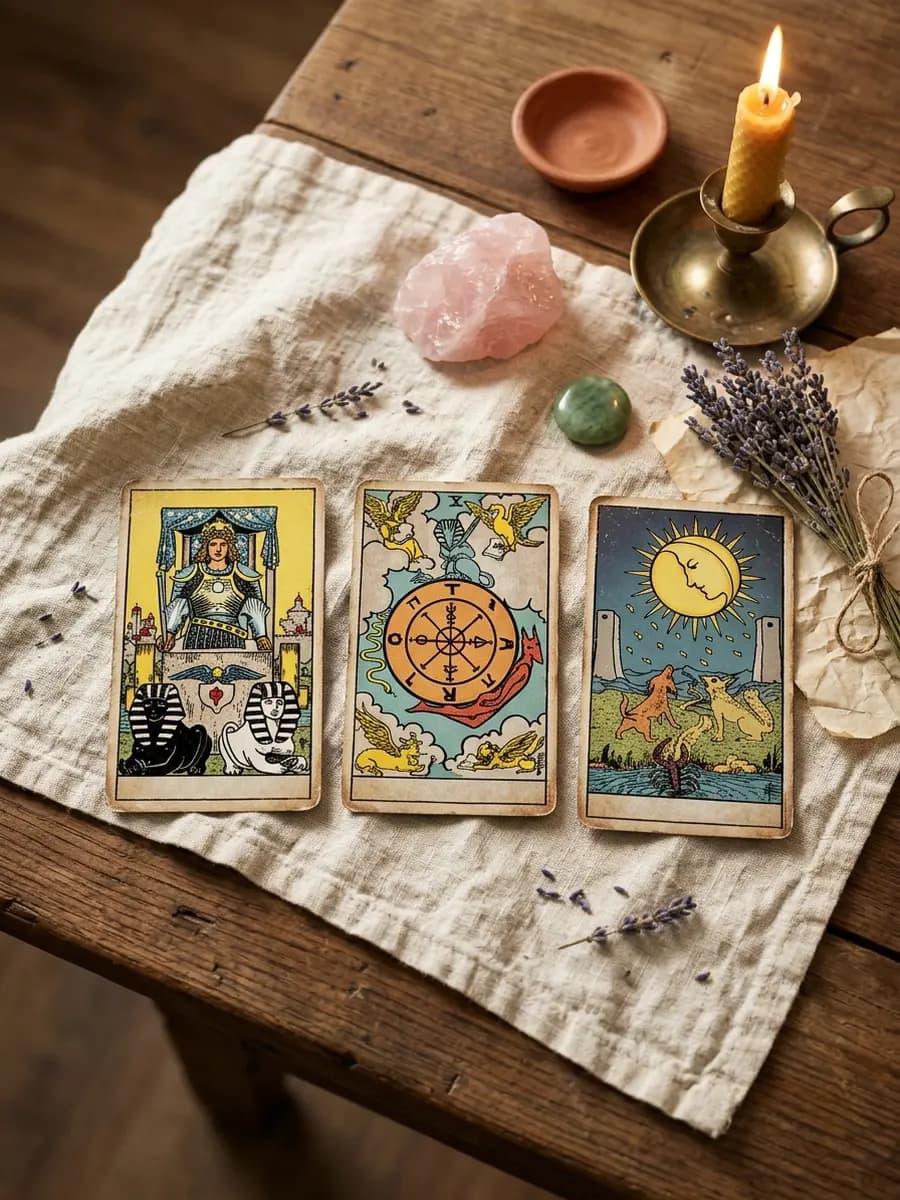
A single-card consultation cuts through cognitive noise to surface your primary daily spiritual lesson or binary decision clarity. The classic Three-Card Spread expands your field of perception across time: mapping the foundational roots (Past), current psychological friction points (Present), and highest probable manifestation trajectory (Future).
Turning Reversed Archetypes into a 21-Day Reflection Practice
Challenging or reversed cards reveal unconscious resistance rather than ill fate. Instead of drawing card after card in anxiety, log your drawn archetype, emotional trigger, and one grounded behavioral micro-action across 21 consecutive days so intuitive symbolism consolidates into calm self-awareness.