In modern pedagogical theory, discipline and freedom in education operate not as opposing forces, but as mutually reinforcing catalysts for intellectual autonomy. Rather than imposing punitive compliance, systematic academic discipline establishes the cognitive scaffolding necessary for students to pursue independent inquiry, critical thinking, and creative expression. Genuine educational freedom is earned exclusively through the deliberate mastery of foundational skills and structured habit architecture.
Discipline and Freedom in Education: The Architecture of Autonomous Learning

Jennie Uyen Chu
意识与能量专家

本文目前仅有越南语版本,中文版正在翻译中。
互动实践数字系统 · 完整版9 个模块
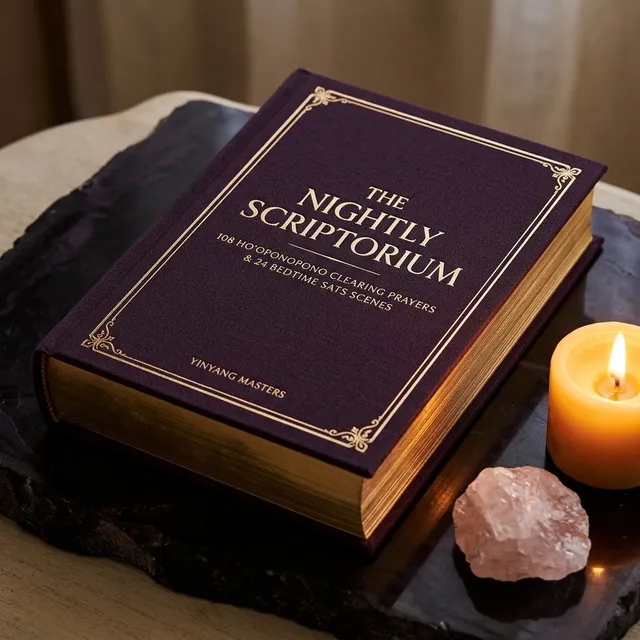
睡前显化秘卷:108篇荷欧波诺波诺清理祷文与SATS五感入睡剧本
你带着一篇清晰的祈祷文和一个平静的场景入睡,而不是满脑子转个不停,并有21夜的习惯帮你坚持下去。
适用于手机、平板或电脑的网页书,另附可打印PDF。选择今晚的心事,阅读为它准备的祈祷文和睡前场景。
👥 3.8万+学员👥 38,000+ 学员 · 240万+ 社群
US$7.99₫209,000一次买断 · 终身可用 · 付款后即刻发送至邮箱

免费领取 2027 天使数字年度地图
通过邮件领取《2027 天使数字年度地图》,内附 2027 个人年速查、每个月的天使数字与全年意图书写空间。
For centuries, educational philosophers and curriculum theorists have engaged in a heated debate regarding classroom management, student agency, and developmental boundaries. One traditional camp asserts that education demands rigid, hierarchical regimentation, where obedience to authoritative instruction is the primary measure of scholastic virtue. Conversely, progressive educational movements frequently argue for unconstrained self-expression, championing absolute laissez-faire liberty under the presumption that natural curiosity alone will drive sustained intellectual flourishing. However, both historical extremes overlook an essential operational reality: without the structured frameworks detailed in operational playbooks like the Jocko Willink 4:30 AM Discipline Routine Guide, unrestrained freedom rapidly degenerates into chaotic drift, cognitive fatigue, and academic disorientation.
To examine the deep synergy between rigour and autonomy, we must look at how foundational training unlocks advanced competence. Just as we analyzed in our breakdown of Discipline Equals Freedom by Jocko Willink and our comprehensive Discipline Equals Freedom Review, external constraints and internalized routines are not prison bars; they are the architectural blueprints that construct genuine human sovereignty.
The Fundamental Paradox: Why Discipline and Freedom Coexist in Education
The apparent tension between educational discipline and individual liberty dissolves when we distinguish between negative liberty (the mere absence of physical or procedural restraint) and positive liberty (the actualized capability and mental power to achieve meaningful self-direction). An untrained mind granted complete structural freedom in an academic environment is rarely free in practice. Instead, it remains entirely subjugated to involuntary internal impulses, dopamine-driven cognitive distractions, emotional volatility, and the paralyzing inertia of choice overload.
When students are not provided with rigorous systems for note-taking, logical analysis, focused reading comprehension, and temporal management, their capacity to engage with complex reality is severely stunted. A child left with a violin has the negative freedom to drag the bow across the strings at will, producing discordant screeching; however, only the child who undergoes years of grueling technical discipline—mastering finger placement, scales, posture, and rhythm—attains the profound positive freedom to interpret Bach, improvise jazz, or compose original sonatas.
免费在线测算工具
生命灵数计算器
快速解答
有。睡前显化秘卷:108篇荷欧波诺波诺清理祷文与SATS五感入睡剧本正是为此设计:选择今晚的心事(金钱、家庭、感情、工作、睡眠或放下),书会打开对应的荷欧波诺波诺祈祷文和一段睡前小场景。
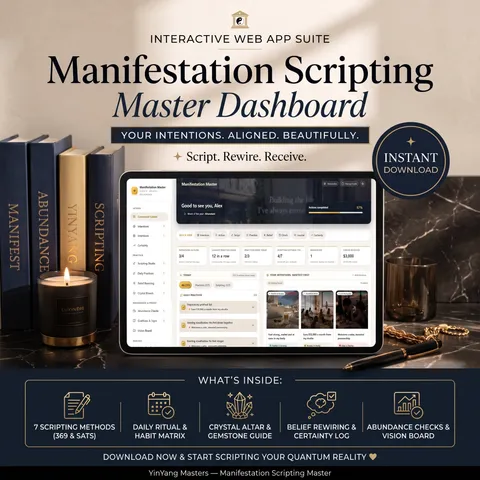
 睡前显化秘卷:108篇荷欧波诺波诺清理祷文与SATS五感入睡剧本查看交互式手册 →
In this manner, educational discipline is not the negation of liberty, but its fertile soil. By establishing clear operating boundaries, consistent academic rhythms, and high standards of intellectual accountability, educators provide learners with the cognitive clarity necessary to transcend their immediate limitations and ascend toward true intellectual self-determination.
Structural Autonomy: How Educational Discipline Cultivates Genuine Creative Freedom
How does structured educational protocol translate into expansive personal agency? The answer lies in the concept of Structural Autonomy. Rather than viewing discipline as an external imposition designed to crush individuality, structural autonomy recognizes discipline as an internal cognitive infrastructure that facilitates spontaneous discovery and sustained creative flow.
Consider the architecture of cognitive load theory. Human working memory is extraordinarily finite, capable of holding only a handful of discrete information chunks simultaneously. When fundamental learning rituals—such as bibliographic sourcing, algebraic manipulation, grammatical syntax, or time-blocked study schedules—are unstandardized, the student's working memory is continuously drained by mundane mechanical friction. Conversely, when these foundational practices are deeply habitualized through rigorous, disciplined repetition, they migrate to procedural memory. This frees up precious prefrontal cortex capacity for high-leverage cognitive operations: synthesis, interdisciplinary analogy, critical skepticism, and creative innovation.
| Pedagogical Dimension | Punitive Compliance (Authoritarian) | Unstructured Laissez-Faire (Permissive) | Structural Autonomy (Disciplined Freedom) |
|---|---|---|---|
| Cognitive Architecture | External rule obedience without internal rational comprehension. | High cognitive entropy, decision fatigue, erratic attention spans. | Internalized procedural routines enabling deep working-memory bandwidth. |
| Learner Psychological State | Fear-driven compliance, passive rebellion, anxiety under scrutiny. | Overwhelmed apathy, imposter syndrome, fragile self-efficacy. | Empowered intrinsic drive, resilient locus of control, grounded confidence. |
| Skill Acquisition Velocity | Rapid rote memorization followed by swift post-exam decay. | Superficial breadth lacking technical depth or analytical rigour. | Compound mastery built upon deliberate, scaffolded foundational skills. |
| Executive Function Impact | Externalizes regulation; creates dependent, reactive followers. | Atrophies self-regulation; leaves impulses unmodulated. | Strengthens prefrontal inhibitory control and voluntary focus networks. |
| Long-term Educational Outcome | Vulnerability to dogma; loss of direction when overseers disappear. | Inability to execute long-term projects; chronic creative frustration. | Lifelong autonomous scholarship, professional grit, and adaptive leadership. |
As illustrated in the comparative analysis above, structural autonomy transforms the pedagogical dynamic. The goal of disciplined education is never to produce docile conformity; rather, it is to forge an impenetrable internal chassis capable of navigating turbulent real-world environments without collapsing into cynicism or indolence.

From Maria Montessori to Modern Neuroscience: Structure as the Gateway to Flow
This holistic reconciliation between order and liberty is neither novel nor speculative; it constitutes the cornerstone of history's most celebrated pedagogical breakthroughs. Dr. Maria Montessori observed in her groundbreaking Casa dei Bambini that true discipline is not something imposed from outside via punishments and extrinsic rewards. Instead, Montessori recognized that spontaneous discipline emerges naturally when a child is placed in a carefully prepared, highly structured environment tailored to their developmental needs.
"A discipline founded on liberty must necessarily be active. We do not consider an individual disciplined only when he has been rendered as artificially silent as a mute and as immovable as a paralytic. He is an individual annihilated, not disciplined. We say that an individual is disciplined when he is the master of himself, and can, therefore, regulate his own conduct when it shall be necessary to follow some rule of life."
— Dr. Maria Montessori, The Montessori Method (1912)
Montessori's concept of "liberty within limits" mirrors John Dewey's pragmatic philosophy in Democracy and Education (1916). Dewey argued that freedom of action without internal reflective thought is a perilous delusion. True mental freedom requires the disciplined capacity to estimate possibilities, weigh evidence, analyze consequences, and choose deliberately. When education fails to cultivate mental discipline, it abandons the student to the mercy of ambient cultural conditioning and commercial manipulation.
Modern neuroscientific research on neuroplasticity and the prefrontal cortex unequivocally confirms these philosophical insights. The brain's executive attention networks—responsible for working memory, goal maintenance, and emotional regulation—function precisely like physical muscles. When subjected to calibrated, consistent resistance (disciplined study, single-task immersion, delayed gratification), the synaptic density across the dorsolateral prefrontal cortex thickens. This structural neurobiological fortification is what unlocks peak performance and Mihaly Csikszentmihalyi’s state of optimal "flow." Flow is never accidental; it is the ultimate psychological manifestation of hard-won technical mastery and disciplined attention.
Actionable Study Protocols: Designing Disciplined Systems for Lifelong Learning Mastery
How can educators, university students, and self-directed adult scholars implement disciplined freedom in their daily intellectual pursuits? Transitioning from abstract philosophy to operational reality requires concrete, repeatable protocols. Embracing the ancient Latin axiom "Disciplina est Libertas" (Discipline is Freedom), you can implement four foundational practices to transform your educational journey:
- The Sovereign Study Cadence (Time-Blocking & Sacred Windows): Eliminate decision fatigue by standardizing non-negotiable study periods. Designate two 90-minute ultradian focus blocks each day where all digital notifications, social feeds, and secondary interruptions are physically quarantined. Treating these study windows as sovereign commitments protects your highest cognitive bandwidth from fragmentation.
- The Active Synthesis Protocol (Feynman Technique & Retrieval Practice): Replace passive re-reading with aggressive, disciplined self-testing. After reading a difficult concept, close the text and articulate the thesis in simple, jargon-free language as if teaching a twelve-year-old. Forcing your brain to retrieve and reorganize information actively builds indelible synaptic pathways far faster than unstructured consumption.
- Boundary-Driven Curiosity (Constrained Exploration): Absolute creative freedom often leads to creative paralysis. Counteract this by establishing explicit constraints: limit an essay draft to exactly 1,000 words, set a strict 45-minute countdown for architectural research, or restrict problem-solving to three primary sources. Paradoxically, strict boundaries force the mind to operate laterally, generating novel insights that unrestricted exploration fails to uncover.
- Radical Academic Accountability (The Daily Learning Ledger): Maintain a physical notebook or markdown journal tracking exactly what was mastered each day, where cognitive friction occurred, and what adjustments are required for tomorrow. Tracking your intellectual progress creates an undeniable trail of compounding competence, reinforcing the neurological loop between self-control and tangible educational liberation.
In conclusion, discipline and freedom in education are not irreconcilable opposites locked in perpetual warfare. They are the twin engines of human evolution. When you embrace the rigorous, demanding, and uncompromising discipline of true scholarship, you do not lose your liberty—you claim the only form of intellectual freedom that truly endures.
同主题免费在线测算工具



马上实践
把这篇文章用起来
8多年来,超过240万名关注者和3.8万+名学员组成的社群,分享了坚持这些练习后在爱情、财富和内心平静上的真实变化。
 睡前显化秘卷:108篇荷欧波诺波诺清理祷文与SATS五感入睡剧本
- 选择今晚的心事(金钱、家庭、感情、工作、睡眠或放下),书会打开对应的荷欧波诺波诺祈祷文和一段睡前小场景。
- 阅读108篇为真实情境而写的祈祷文,从看到账户余额的不安到一直没有回复的消息,语句简单,可以轻声念出。
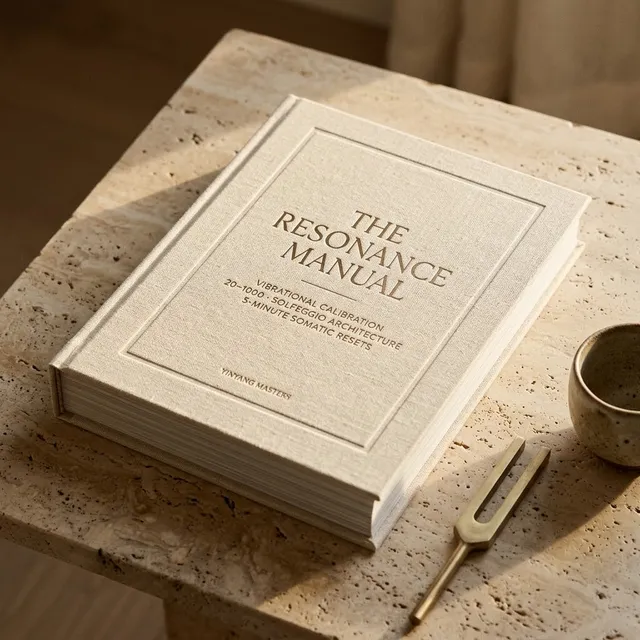
 频率共振手札:意识能量图谱(20–1000)、索尔费吉欧声波与5分钟神经舒缓指南
- 在状态罗盘上点选你此刻的感受,即可获得一个向上的小步骤、一个搭配的Solfeggio频率和一段简短的身体放松练习。
- 阅读受David R. Hawkins启发的20到700共17个层级地图,用通俗的话说明每个层级在日常中的感受。
参考来源与核验资料
- [1]The Montessori Method: Scientific Pedagogy as Applied to Child Education - Maria Montessori ↗
- [2]Democracy and Education: An Introduction to the Philosophy of Education - John Dewey ↗
依据正念实操与个人成长编辑规范审校。 编辑政策

配套交互式手册与系统
真实故事
查看全部故事 →读者如何因这些练习而改变
8多年来,超过240万名关注者和3.8万+名学员组成的社群,分享了坚持这些练习后在爱情、财富和内心平静上的真实变化。
 爱情故事
双生火焰日记有用吗?真实故事与每日练习
双生火焰日记真的有用吗?分享走出分手、迎来灵魂伴侣、找回平静的真实经历,并展示每天的练习在日记里是什么样子。
阅读指南 金钱故事
金钱显化日记有用吗?真实故事
金钱显化日记真的有用吗?分享还清欠款、争取加薪、缓解金钱焦虑的经历,并展示每天的练习在日记里是什么样子。
阅读指南
 爱情故事
分手后如何显化爱情:真实疗愈故事
分手后如何显化爱情?分享人们如何用自爱肯定语、照镜子练习和爱情日记先疗愈自己,再重新敞开心扉的真实经历。
阅读指南 金钱故事
显化无债生活:稳步还清欠款的真实故事
如何显化无债生活?分享人们如何把金钱肯定语、丰盛日记与清晰目标、截止日期和每日证据结合起来,稳步走向无债。
阅读指南 爱情故事
显化灵魂伴侣:从内在开始的真实故事
如何显化灵魂伴侣?分享人们如何写下理想伴侣脚本、制作爱情愿景板,并在爱到来之前先对生活说“好”。
阅读指南 金钱故事
显化加薪:自信开口的真实故事
如何显化加薪或升职?分享人们如何清理金钱信念、练习自信肯定语,并在开口前记录下自己的成绩。
阅读指南 爱情故事
双生火焰重逢故事:走向平静的真实旅程
真实的双生火焰重逢故事:人们如何借助旅程阶段、征兆记录和引导冥想,在分离期间找回平静,无论最终是否重逢。
阅读指南 金钱故事
从金钱焦虑到与钱和解:真实故事
分享缓解金钱焦虑的经历:查看账户前听一段简短的引导冥想,每周一次金钱约会,并温和地审视旧信念。
阅读指南
相关指南


更多文章



热门内容
本周读者最常打开的内容
按过去 7 天的真实访问量排序。





免费互动指南
免费领取 2027 天使数字年度地图
通过邮件领取《2027 天使数字年度地图》,内附 2027 个人年速查、每月指引天使数字与专属年度意图书写空间。
关注我们
每天的仪式,就在你的动态里
Yin Yang Masters 的简短指南、月相仪式和计划本使用教程。





在 AI 助手中直接询问 Yinyang Masters
在聊天中获得同样的计算与指引:添加免费的 Yinyang Masters 应用,然后用日常语言提问。无需注册账号。
试着问: “找一篇关于开始每日灵性练习的 Yinyang Masters 指南。”

正在直播
认识 Moon Keeper,我们的直播祭坛守护者
Moon Keeper 每小时观察星象、抽一张塔罗牌,并分享一段 3 分钟的静心练习。来祭坛看看,关注每小时日记,并在留言簿里写下你的话。

每日免费通讯
每天收到 Yin Yang Masters 通讯
每天一封简短邮件:一个今日练习、一个读者的真实故事,以及关于爱情、财富与内心平静的最新指南。
8多年来,超过240万名关注者和3.8万+名学员组成的社群,分享了坚持这些练习后在爱情、财富和内心平静上的真实变化。