Methodology & Zhouyi Philosophical Architecture
The I Ching (Zhouyi, 周易) is humanity’s oldest systematic binary calculus and cosmological philosophy, formulated across millennia by Fu Xi, King Wen, the Duke of Zhou, and Confucius. It views reality not as static objects, but as continuous cyclical transformations between Yin (receptive stillness) and Yang (active creation).
The Three Bronze Coins and Six Lines (Liu Yao)
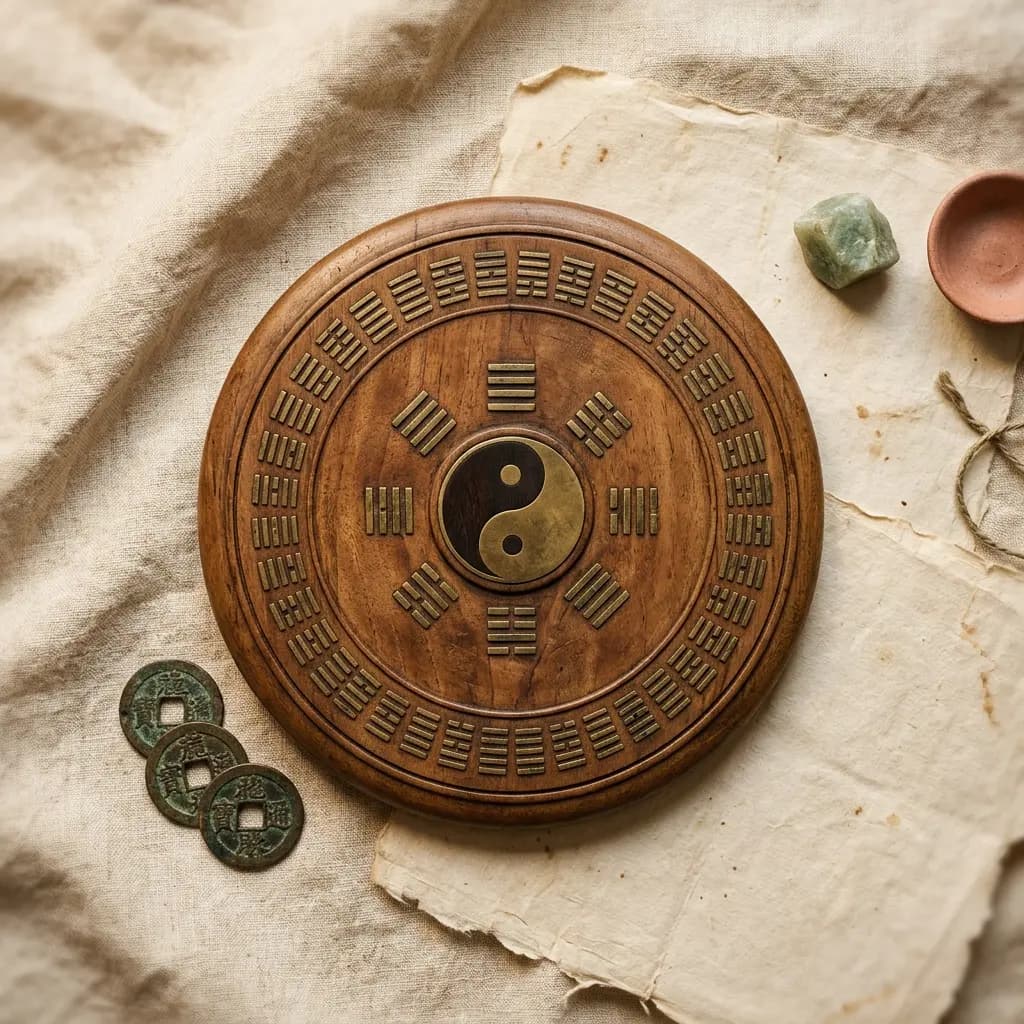
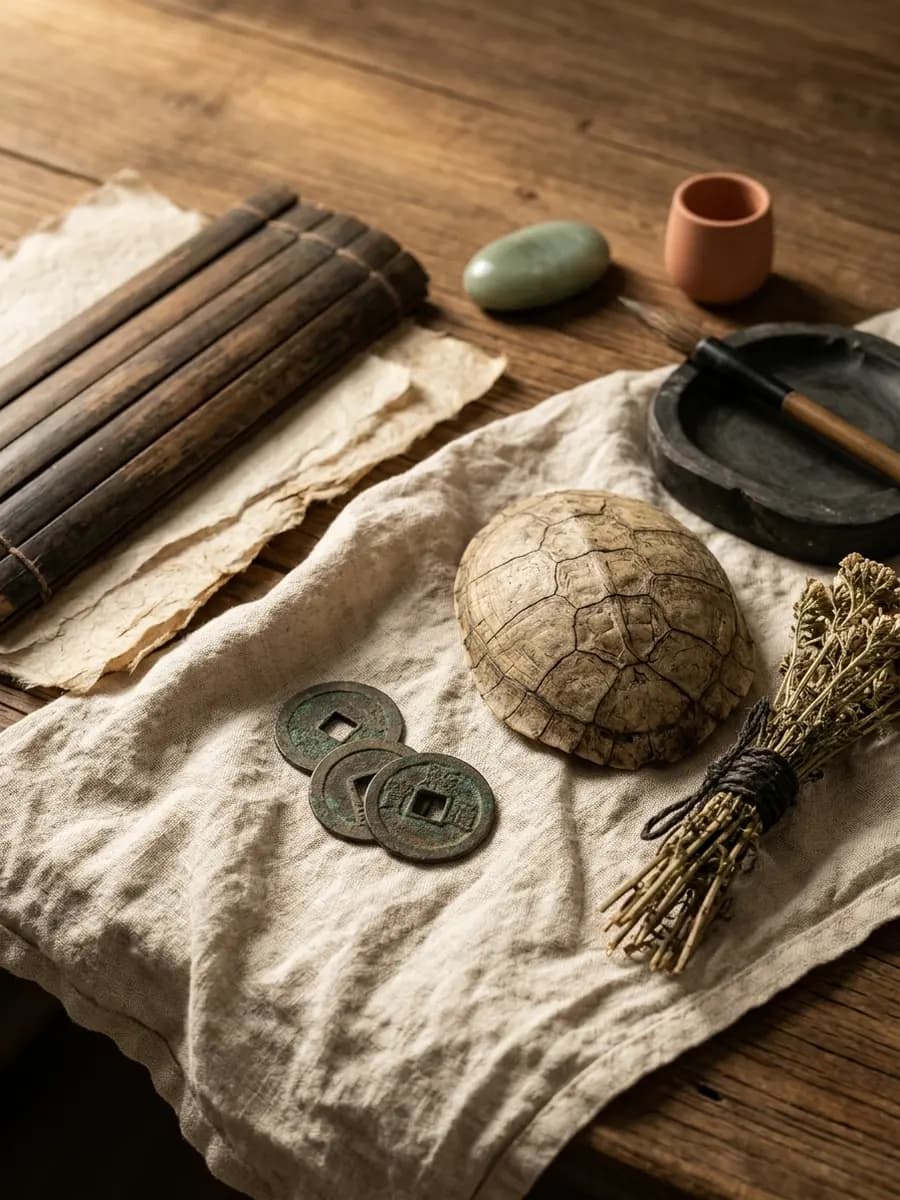
Casting three coins six consecutive times determines each line from bottom (Line 1) to top (Line 6). Coins yield four numerical states: Stable Yang (7), Stable Yin (8), Extreme Moving Yang (9, aging Yang transmuting into Yin), and Extreme Moving Yin (6, aging Yin transmuting into Yang). These changing lines capture dynamic inflection points in your situation.
The Primary and Resulting Hexagrams
The Primary Hexagram (Ben Gua) models the present energetic architecture, while the Resulting Transformed Hexagram (Zhi Gua) reveals the future trajectory once active moving lines resolve. The Judgment (Gua Ci) and Image (Xiang Ci) provide ethical and strategic counsel for the superior person (Junzi).
Applying Moving-Line Counsel Across a 21-Day Strategic Horizon
Each hexagram belongs to one of the Eight Palaces (Metal, Wood, Water, Fire, Earth) and teaches timing discipline—knowing when to advance boldly and when to hold still. Recording your cast, active moving lines, and weekly real-world developments over 21 days turns classical Zhouyi counsel into measurable decision clarity.