
In modern pedagogical theory, discipline and freedom in education operate not as opposing forces, but as mutually reinforcing catalysts for intellectual autonomy. Rather than imposing punitive compliance, systematic academic discipline establishes the cognitive scaffolding necessary for students to pursue independent inquiry, critical thinking, and creative expression. Genuine educational freedom is earned exclusively through the deliberate mastery of foundational skills and structured habit architecture.
Discipline and Freedom in Education: The Architecture of Autonomous Learning

Jennie Uyên Chu
Chuyên gia Tâm thức & Năng lượng

Bài này hiện chỉ có bản tiếng Việt.
Ứng dụng thực hành tương tác · Bản trọn bộ9 phân hệ
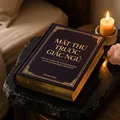
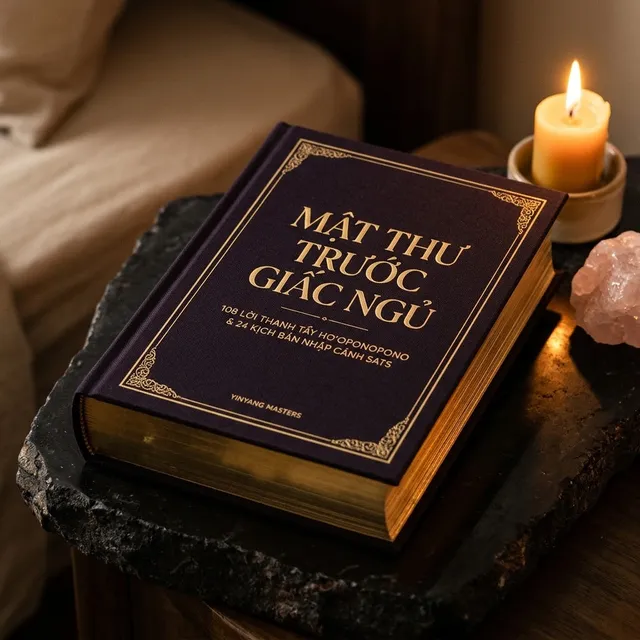
Mật Thư Trước Giấc Ngủ
Bạn lên giường với một lời nguyện rõ ràng và một cảnh bình yên thay cho cái đầu quay cuồng, kèm thói quen 21 đêm để giữ nhịp.
Sách web dùng trên điện thoại, máy tính bảng hoặc laptop, kèm bản PDF để in. Chọn nỗi bận tâm tối nay rồi đọc lời nguyện và cảnh ngủ dành cho nó.
👥 38.000+ học viên👥 38.000+ học viên · Cộng đồng 2,4M+
7,99 US$209.000 ₫Trả 1 lần duy nhất · Dùng trọn đời · Nhận qua email tức thì

Bản Đồ Số Thiên Thần 2027 miễn phí
Nhận qua email Bản Đồ Số Thiên Thần 2027 kèm bảng tự tra Năm Cá Nhân, con số thiên thần từng tháng và chỗ viết ý định cả năm.
For centuries, educational philosophers and curriculum theorists have engaged in a heated debate regarding classroom management, student agency, and developmental boundaries. One traditional camp asserts that education demands rigid, hierarchical regimentation, where obedience to authoritative instruction is the primary measure of scholastic virtue. Conversely, progressive educational movements frequently argue for unconstrained self-expression, championing absolute laissez-faire liberty under the presumption that natural curiosity alone will drive sustained intellectual flourishing. However, both historical extremes overlook an essential operational reality: without the structured frameworks detailed in operational playbooks like the Jocko Willink 4:30 AM Discipline Routine Guide, unrestrained freedom rapidly degenerates into chaotic drift, cognitive fatigue, and academic disorientation.
To examine the deep synergy between rigour and autonomy, we must look at how foundational training unlocks advanced competence. Just as we analyzed in our breakdown of Discipline Equals Freedom by Jocko Willink and our comprehensive Discipline Equals Freedom Review, external constraints and internalized routines are not prison bars; they are the architectural blueprints that construct genuine human sovereignty.
The Fundamental Paradox: Why Discipline and Freedom Coexist in Education
The apparent tension between educational discipline and individual liberty dissolves when we distinguish between negative liberty (the mere absence of physical or procedural restraint) and positive liberty (the actualized capability and mental power to achieve meaningful self-direction). An untrained mind granted complete structural freedom in an academic environment is rarely free in practice. Instead, it remains entirely subjugated to involuntary internal impulses, dopamine-driven cognitive distractions, emotional volatility, and the paralyzing inertia of choice overload.
When students are not provided with rigorous systems for note-taking, logical analysis, focused reading comprehension, and temporal management, their capacity to engage with complex reality is severely stunted. A child left with a violin has the negative freedom to drag the bow across the strings at will, producing discordant screeching; however, only the child who undergoes years of grueling technical discipline—mastering finger placement, scales, posture, and rhythm—attains the profound positive freedom to interpret Bach, improvise jazz, or compose original sonatas.
Công cụ tra cứu miễn phí
Tính Số Đường Đời Thần Số Học
Trả lời nhanh
Có. Mật Thư Trước Giấc Ngủ — 108 Lời Thanh Tẩy Ho'oponopono & Kịch Bản Nhập Cảnh SATS Khơi Thông Tài Lộc – Hàn Gắn Nhân Duyên được làm cho đúng việc này: Chọn nỗi bận tâm tối nay (tiền bạc, gia đình, tình cảm, công việc, giấc ngủ hay buông bỏ), sách mở đúng lời nguyện Ho'oponopono và một cảnh ngủ ngắn đi kèm.
 Mật Thư Trước Giấc Ngủ — 108 Lời Thanh Tẩy Ho'oponopono & Kịch Bản Nhập Cảnh SATS Khơi Thông Tài Lộc – Hàn Gắn Nhân DuyênXem Sổ tay Tương tác →
In this manner, educational discipline is not the negation of liberty, but its fertile soil. By establishing clear operating boundaries, consistent academic rhythms, and high standards of intellectual accountability, educators provide learners with the cognitive clarity necessary to transcend their immediate limitations and ascend toward true intellectual self-determination.
Structural Autonomy: How Educational Discipline Cultivates Genuine Creative Freedom
How does structured educational protocol translate into expansive personal agency? The answer lies in the concept of Structural Autonomy. Rather than viewing discipline as an external imposition designed to crush individuality, structural autonomy recognizes discipline as an internal cognitive infrastructure that facilitates spontaneous discovery and sustained creative flow.
Consider the architecture of cognitive load theory. Human working memory is extraordinarily finite, capable of holding only a handful of discrete information chunks simultaneously. When fundamental learning rituals—such as bibliographic sourcing, algebraic manipulation, grammatical syntax, or time-blocked study schedules—are unstandardized, the student's working memory is continuously drained by mundane mechanical friction. Conversely, when these foundational practices are deeply habitualized through rigorous, disciplined repetition, they migrate to procedural memory. This frees up precious prefrontal cortex capacity for high-leverage cognitive operations: synthesis, interdisciplinary analogy, critical skepticism, and creative innovation.
| Pedagogical Dimension | Punitive Compliance (Authoritarian) | Unstructured Laissez-Faire (Permissive) | Structural Autonomy (Disciplined Freedom) |
|---|---|---|---|
| Cognitive Architecture | External rule obedience without internal rational comprehension. | High cognitive entropy, decision fatigue, erratic attention spans. | Internalized procedural routines enabling deep working-memory bandwidth. |
| Learner Psychological State | Fear-driven compliance, passive rebellion, anxiety under scrutiny. | Overwhelmed apathy, imposter syndrome, fragile self-efficacy. | Empowered intrinsic drive, resilient locus of control, grounded confidence. |
| Skill Acquisition Velocity | Rapid rote memorization followed by swift post-exam decay. | Superficial breadth lacking technical depth or analytical rigour. | Compound mastery built upon deliberate, scaffolded foundational skills. |
| Executive Function Impact | Externalizes regulation; creates dependent, reactive followers. | Atrophies self-regulation; leaves impulses unmodulated. | Strengthens prefrontal inhibitory control and voluntary focus networks. |
| Long-term Educational Outcome | Vulnerability to dogma; loss of direction when overseers disappear. | Inability to execute long-term projects; chronic creative frustration. | Lifelong autonomous scholarship, professional grit, and adaptive leadership. |
As illustrated in the comparative analysis above, structural autonomy transforms the pedagogical dynamic. The goal of disciplined education is never to produce docile conformity; rather, it is to forge an impenetrable internal chassis capable of navigating turbulent real-world environments without collapsing into cynicism or indolence.

From Maria Montessori to Modern Neuroscience: Structure as the Gateway to Flow
This holistic reconciliation between order and liberty is neither novel nor speculative; it constitutes the cornerstone of history's most celebrated pedagogical breakthroughs. Dr. Maria Montessori observed in her groundbreaking Casa dei Bambini that true discipline is not something imposed from outside via punishments and extrinsic rewards. Instead, Montessori recognized that spontaneous discipline emerges naturally when a child is placed in a carefully prepared, highly structured environment tailored to their developmental needs.
"A discipline founded on liberty must necessarily be active. We do not consider an individual disciplined only when he has been rendered as artificially silent as a mute and as immovable as a paralytic. He is an individual annihilated, not disciplined. We say that an individual is disciplined when he is the master of himself, and can, therefore, regulate his own conduct when it shall be necessary to follow some rule of life."
— Dr. Maria Montessori, The Montessori Method (1912)
Montessori's concept of "liberty within limits" mirrors John Dewey's pragmatic philosophy in Democracy and Education (1916). Dewey argued that freedom of action without internal reflective thought is a perilous delusion. True mental freedom requires the disciplined capacity to estimate possibilities, weigh evidence, analyze consequences, and choose deliberately. When education fails to cultivate mental discipline, it abandons the student to the mercy of ambient cultural conditioning and commercial manipulation.
Modern neuroscientific research on neuroplasticity and the prefrontal cortex unequivocally confirms these philosophical insights. The brain's executive attention networks—responsible for working memory, goal maintenance, and emotional regulation—function precisely like physical muscles. When subjected to calibrated, consistent resistance (disciplined study, single-task immersion, delayed gratification), the synaptic density across the dorsolateral prefrontal cortex thickens. This structural neurobiological fortification is what unlocks peak performance and Mihaly Csikszentmihalyi’s state of optimal "flow." Flow is never accidental; it is the ultimate psychological manifestation of hard-won technical mastery and disciplined attention.
Actionable Study Protocols: Designing Disciplined Systems for Lifelong Learning Mastery
How can educators, university students, and self-directed adult scholars implement disciplined freedom in their daily intellectual pursuits? Transitioning from abstract philosophy to operational reality requires concrete, repeatable protocols. Embracing the ancient Latin axiom "Disciplina est Libertas" (Discipline is Freedom), you can implement four foundational practices to transform your educational journey:
- The Sovereign Study Cadence (Time-Blocking & Sacred Windows): Eliminate decision fatigue by standardizing non-negotiable study periods. Designate two 90-minute ultradian focus blocks each day where all digital notifications, social feeds, and secondary interruptions are physically quarantined. Treating these study windows as sovereign commitments protects your highest cognitive bandwidth from fragmentation.
- The Active Synthesis Protocol (Feynman Technique & Retrieval Practice): Replace passive re-reading with aggressive, disciplined self-testing. After reading a difficult concept, close the text and articulate the thesis in simple, jargon-free language as if teaching a twelve-year-old. Forcing your brain to retrieve and reorganize information actively builds indelible synaptic pathways far faster than unstructured consumption.
- Boundary-Driven Curiosity (Constrained Exploration): Absolute creative freedom often leads to creative paralysis. Counteract this by establishing explicit constraints: limit an essay draft to exactly 1,000 words, set a strict 45-minute countdown for architectural research, or restrict problem-solving to three primary sources. Paradoxically, strict boundaries force the mind to operate laterally, generating novel insights that unrestricted exploration fails to uncover.
- Radical Academic Accountability (The Daily Learning Ledger): Maintain a physical notebook or markdown journal tracking exactly what was mastered each day, where cognitive friction occurred, and what adjustments are required for tomorrow. Tracking your intellectual progress creates an undeniable trail of compounding competence, reinforcing the neurological loop between self-control and tangible educational liberation.
In conclusion, discipline and freedom in education are not irreconcilable opposites locked in perpetual warfare. They are the twin engines of human evolution. When you embrace the rigorous, demanding, and uncompromising discipline of true scholarship, you do not lose your liberty—you claim the only form of intellectual freedom that truly endures.
Công cụ tra cứu miễn phí cùng chủ đề


Áp dụng ngay
Đưa bài viết này vào thực hành
Suốt hơn 8 năm qua, cộng đồng hơn 2,4 triệu người theo dõi và 38.000+ học viên đã chia sẻ kết quả thật khi duy trì những thực hành này trong tình yêu, tài chính và sự bình an.
 Mật Thư Trước Giấc Ngủ — 108 Lời Thanh Tẩy Ho'oponopono & Kịch Bản Nhập Cảnh SATS Khơi Thông Tài Lộc – Hàn Gắn Nhân Duyên
- Chọn nỗi bận tâm tối nay (tiền bạc, gia đình, tình cảm, công việc, giấc ngủ hay buông bỏ), sách mở đúng lời nguyện Ho'oponopono và một cảnh ngủ ngắn đi kèm.
- Đọc 108 lời nguyện viết cho tình huống thật, từ lúc nhìn số dư thấy nặng lòng tới tin nhắn mãi không được trả lời, câu chữ đơn giản để thì thầm.
 Cẩm Nang Cộng Hưởng Tần Số — Bản Đồ Rung Động (20–1000), Phác Đồ Âm Thanh Solfeggio & Thả Lỏng Hệ Thần Kinh 5 Phút
- Chạm vào trạng thái của bạn lúc này trên La Bàn Trạng Thái để nhận một bước nhỏ đi lên, một tần số Solfeggio đi kèm và một bài thả lỏng cơ thể ngắn.
- Đọc bản đồ 17 mức từ 20 đến 700 lấy cảm hứng từ David R. Hawkins, viết bằng lời dễ hiểu, kèm cảm giác thường ngày ở mỗi mức.
Có trong cửa hàng
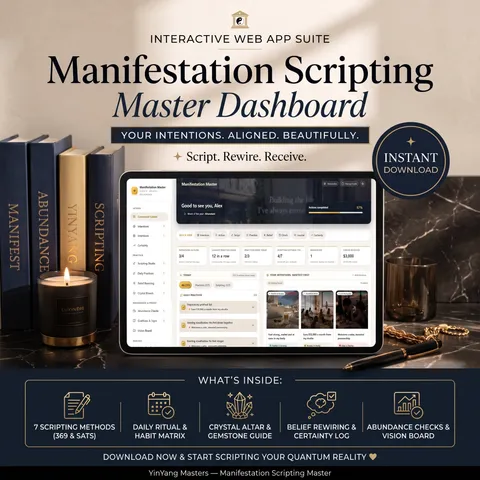
Mẫu Sổ Tay Manifest
Gom mọi ý định, kịch bản và thực hành hằng ngày về một chỗ. Bảy cách viết kịch bản có sẵn, sổ tự đếm từng vòng cho bạn, và điểm niềm tin mỗi tuần cho thấy bạn đang tin vào điều mình muốn nhiều hơn.
Nguồn tham khảo & Đối chiếu
- [1]The Montessori Method: Scientific Pedagogy as Applied to Child Education - Maria Montessori ↗
- [2]Democracy and Education: An Introduction to the Philosophy of Education - John Dewey ↗
Được biên tập theo chuẩn thực hành chánh niệm & phát triển cá nhân. Chính sách biên tập

Bộ Sổ Tay & Hệ Thống Tương Tác Đi Kèm

Câu chuyện thật
Xem mọi câu chuyện →Người đọc đã thay đổi thế nào với những thực hành này
Suốt hơn 8 năm qua, cộng đồng hơn 2,4 triệu người theo dõi và 38.000+ học viên đã chia sẻ kết quả thật khi duy trì những thực hành này trong tình yêu, tài chính và sự bình an.
 Chuyện tình yêu
Nhật ký Twin Flame có hiệu quả không? Câu chuyện thật
Nhật ký twin flame có hiệu quả không? Câu chuyện thật về chữa lành sau chia tay, thu hút tri kỷ, tìm lại bình yên và cách luyện tập mỗi ngày.
Xem cẩm nang Chuyện tiền bạc
Nhật ký thu hút tiền bạc có hiệu quả không? Chuyện thật
Nhật ký thu hút tiền bạc có hiệu quả không? Câu chuyện thật về trả hết nợ, xin tăng lương, bớt lo âu tiền bạc và cách luyện tập mỗi ngày.
Xem cẩm nang
 Chuyện tình yêu
Thu hút tình yêu sau chia tay: chuyện chữa lành có thật
Câu chuyện thật về thu hút tình yêu sau chia tay: dùng câu khẳng định yêu bản thân, soi gương và nhật ký tình yêu để chữa lành trước rồi mở lòng lại.
Xem cẩm nang Chuyện tiền bạc
Thu hút cuộc sống sạch nợ: câu chuyện thật
Câu chuyện thật về thu hút cuộc sống sạch nợ: kết hợp câu khẳng định tiền bạc, nhật ký thịnh vượng với mục tiêu rõ, hạn chót và bằng chứng mỗi ngày.
Xem cẩm nang Chuyện tình yêu
Thu hút tri kỷ: câu chuyện thật bắt đầu từ bên trong
Câu chuyện thật về thu hút tri kỷ: viết kịch bản người bạn đời lý tưởng, làm bảng tầm nhìn và mở lòng với cuộc sống trước khi tình yêu đến.
Xem cẩm nang Chuyện tiền bạc
Thu hút tăng lương: câu chuyện thật về sự tự tin
Câu chuyện thật về thu hút tăng lương, thăng chức: gỡ niềm tin cản trở, luyện câu khẳng định tự tin và ghi bằng chứng trước khi đề nghị.
Xem cẩm nang Chuyện tình yêu
Câu chuyện đoàn tụ twin flame: hành trình thật về bình yên
Câu chuyện đoàn tụ twin flame có thật: dùng các giai đoạn hành trình, sổ dấu hiệu và thiền dẫn để tìm bình yên khi xa cách, dù có quay lại hay không.
Xem cẩm nang Chuyện tiền bạc
Từ lo âu tiền bạc đến bình tâm: câu chuyện thật
Câu chuyện thật về vượt qua lo âu tiền bạc: một bài thiền ngắn trước khi xem tài khoản, buổi hẹn hò với tiền mỗi tuần và soi lại niềm tin cũ.
Xem cẩm nang
Hướng dẫn liên quan


Bài viết khác



Đang được đọc nhiều
Bài mọi người mở nhiều nhất tuần này
Xếp theo lượt xem thật trong 7 ngày qua.





🔥 Bắt đầu Ngày 1 ngay tối nay · Mua 1 lần dùng mãi
Mật Thư Trước Giấc Ngủ — 108 Lời Thanh Tẩy Ho'oponopono & Kịch Bản Nhập Cảnh SATS Khơi Thông Tài Lộc – Hàn Gắn Nhân Duyên
Ấn bản sách đầu giường tương tác kèm bản PDF minh họa in đẹp: trọn bộ 108 lời thanh tẩy Ho'oponopono đánh số từng tình huống và 24 kịch bản ngủ SATS 5 giác quan giúp buông nặng lòng, hạ cái tôi và gieo ý niệm bình yên.
TÀI LIỆU TƯƠNG TÁC MIỄN PHÍ
Nhận Miễn Phí Bản Đồ Số Thiên Thần Năm 2027
Nhận qua email Bản Đồ Số Thiên Thần 2027 kèm bảng tự tra Năm Cá Nhân, con số dẫn đường từng tháng và góc riêng viết ý định cả năm.
Theo dõi Yin Yang Masters
Nghi thức mỗi ngày ngay trên bảng tin của bạn
Hướng dẫn ngắn, nghi thức theo trăng và cách dùng sổ kế hoạch từ Yin Yang Masters.



Khám phá thêm
Thêm từ Yin Yang Masters


Hỏi Yinyang Masters ngay trong trợ lý AI của bạn
Nhận cùng phép tính và gợi ý ngay trong khung chat: thêm app Yinyang Masters miễn phí rồi hỏi bằng lời thường. Không cần tài khoản.
Thử hỏi: “Tìm bài hướng dẫn Yinyang Masters về bắt đầu thực hành tâm linh mỗi ngày.”

Đang trực
Gặp Moon Keeper, người giữ điện thờ trực tiếp
Mỗi giờ Moon Keeper đọc bầu trời, rút một lá tarot và chia sẻ một bài tĩnh tâm 3 phút. Ghé điện thờ, theo dõi nhật ký từng giờ và để lại lời nhắn trong sổ khách.

BẢN TIN MIỄN PHÍ MỖI NGÀY
Nhận Bản Tin Yin Yang Masters Mỗi Ngày
Mỗi ngày một email ngắn: một thực hành cho hôm nay, một câu chuyện thật của bạn đọc và bài hướng dẫn mới nhất về tình yêu, tiền bạc, sự bình an.
Suốt hơn 8 năm qua, cộng đồng hơn 2,4 triệu người theo dõi và 38.000+ học viên đã chia sẻ kết quả thật khi duy trì những thực hành này trong tình yêu, tài chính và sự bình an.