



Is a Planner Worth It? Paper vs Digital, and How to Test Before You Buy


A planner is worth it when your problem is forgotten tasks, missed deadlines or a week that disappears without a trace. It is not worth it if you will not open it. The cheapest test is four weeks with one page a day before you spend anything.
This guide helps you decide whether you need a planner, compares planners with journals, paper with digital and time blocking with the Pomodoro method, and ends with a simple trial.
Is a Planner Worth It? A Quick Test
A planner earns its cost only if it changes what you do on Monday. Ask four questions:
- Do you forget commitments or double-book yourself?
- Do you finish the day unsure what you actually did?
- Do you have goals with dates, such as an exam, a launch or a trip?
- Will you open it at the same time every day?
Two or more yes answers suggest a planner will help. If you answer no to the last one, the format is wrong, not the idea. Many people who say planners do not work were using a format that did not fit how they live.
A planner also has real costs: the price, the minutes spent filling it in and the guilt of empty pages. Count the minutes. If the daily upkeep is more than ten, simplify it.

Planner vs Journal: What Each One Is For
A planner looks forward and a journal looks back. A planner holds dates, tasks and goals. A journal holds thoughts, events and reflection.
| Planner | Journal | |
|---|---|---|
| Main question | What will I do, and when? | What happened, and what did I notice? |
| Time direction | Forward | Backward |
| Typical content | Tasks, appointments, goals, habits | Feelings, insights, events |
| Failure mode | Overpacked, never reviewed | Never reread |
You can use both, and many people do. A weekly review is where the two meet: look back at what happened, then plan the next week with that in mind. A planner that includes a weekly review and a place for notes covers most of both.
Digital Planner vs Paper: Which Is Worth Paying For?
Neither format is better in general. Paper is calm and tactile, and digital is searchable and can total things for you. Choose by where you already spend your day.
| Paper planner | Digital planner | |
|---|---|---|
| Strength | No screen, quick to open, calm | Search, links between pages, auto-totals, backup |
| Weakness | Cannot search or total; lost if misplaced | Needs a device; easy to ignore |
| Best for | People who think on paper | People who live on a phone or laptop |
| Cost pattern | Buy a new one each year | Often a one-time purchase |
Digital planners vary a lot. A static PDF is a printable page on a screen. A web app can connect pieces: a goal that shows its habits and milestones, and a weekly review that fills in its own numbers.
The 2027 Master Year Planner is a web app of that second kind. It opens in your browser, works offline and saves on your device, with no account. It has a goals hub with pace tracking, a weekly habit grid, a weekly review that fills in its numbers, and a calendar of 2027 moon and eclipse dates for reflection. It also has a print option, so you can keep a paper copy of a page.
If you are still choosing a yearly format, the 2027 yearly planner guide shows how to set goals and compare printable, free and digital options.
Bullet Journal vs Planner: Flexibility vs Structure
A bullet journal is a blank notebook organized with a simple system of dots, dashes and migration of unfinished tasks. A planner arrives with the structure already printed or built in.
- Choose a bullet journal if you enjoy designing pages and want full control. The cost is setup time and the risk of spending the time on decoration.
- Choose a planner if you want to start today and keep your energy for the tasks, not the layout.
If you drift between them, try a hybrid: a ready-made weekly planner for dates and a plain notebook for notes. The point of both is the same, which is to look at your week on purpose.
Time Blocking vs Pomodoro: Which Method Should a Planner Support?
Time blocking assigns each task a slot on the calendar. The Pomodoro technique works in short focused intervals with breaks. They answer different questions: blocking decides when a task happens, and Pomodoro helps you stay on it once you start.
Time blocking and Pomodoro combine well. Block two hours for a report, then work inside that block in focused intervals. A planner only needs a place to write the block and the task list. The time blocking planner guide covers a deep-work version, and the Flowmodoro guide explains a flexible timer.
If your day has no fixed hours, start with the 1-3-5 rule: one big task, three medium and five small. It limits a day to a number you can finish.
How to Test a Planner for Four Weeks
A four-week trial tells you more than any review. Use one format only, and keep the rules few.
- Week 1: Each morning, write the three most important tasks. Each evening, tick or move them. Nothing else.
- Week 2: Add appointments and deadlines. Notice what you forget to write down.
- Week 3: Add a weekly review of ten minutes: what moved, what drained you and one change.
- Week 4: Decide. Did you open it on at least five days of seven? Did you miss fewer commitments?
If you did, a planner is worth buying or upgrading. If you did not, simplify the format or try another before spending more. Time management research and habit research agree on one point: a small routine you repeat beats an ambitious system you drop.
It is worth it if you forget commitments, miss deadlines or lose track of your week, and if you will open it daily. If you will not, the price and effort are wasted, so run a four-week test first.
Research & References
- [1]https://en.wikipedia.org/wiki/Time_management ↗
- [2]https://en.wikipedia.org/wiki/Bullet_journal ↗
- [3]https://en.wikipedia.org/wiki/Timeboxing ↗
For comprehensive editorial standards and health/financial disclaimers, view our Editorial Policy.
Tools featured in this guide

Guides in this Topic
View all (26) →
2027 Yearly Planner: How to Set Goals and Choose a Format That You Will Use
A 2027 yearly planner works when goals, habits and weekly reviews connect. Set SMART goals with obstacles, then pick printable, free or digital.
Read guide
Deconstructing Elon Musk's Daily Schedule: The Power of 5-Minute Time Blocking
Deconstruct Elon Musk's daily schedule and ultra-granular 5-minute time blocking routine. Practical templates for extreme productivity and focus.
Read guide
Habit Tracker in Google Sheets: How to Build One and When to Switch
Build a habit tracker in Google Sheets with checkboxes, a streak count and a weekly view. See the free template layout and when a web app is easier.
Read guide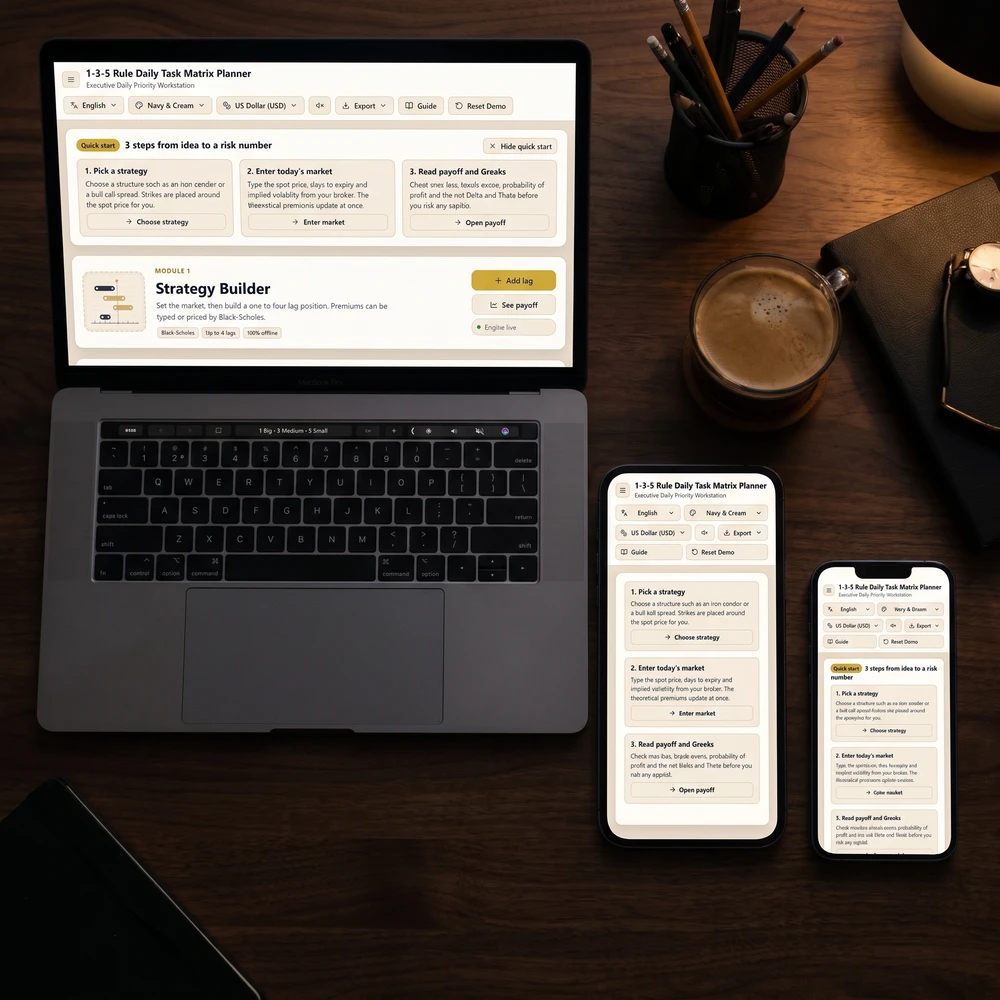
The 1-3-5 Rule Daily Task Matrix: Anti-Overwhelm Focus & Productivity Guide
Master the 1-3-5 rule daily productivity system: organize 1 big goal, 3 medium tasks, and 5 quick wins to eliminate burnout and maintain daily focus.
Read guide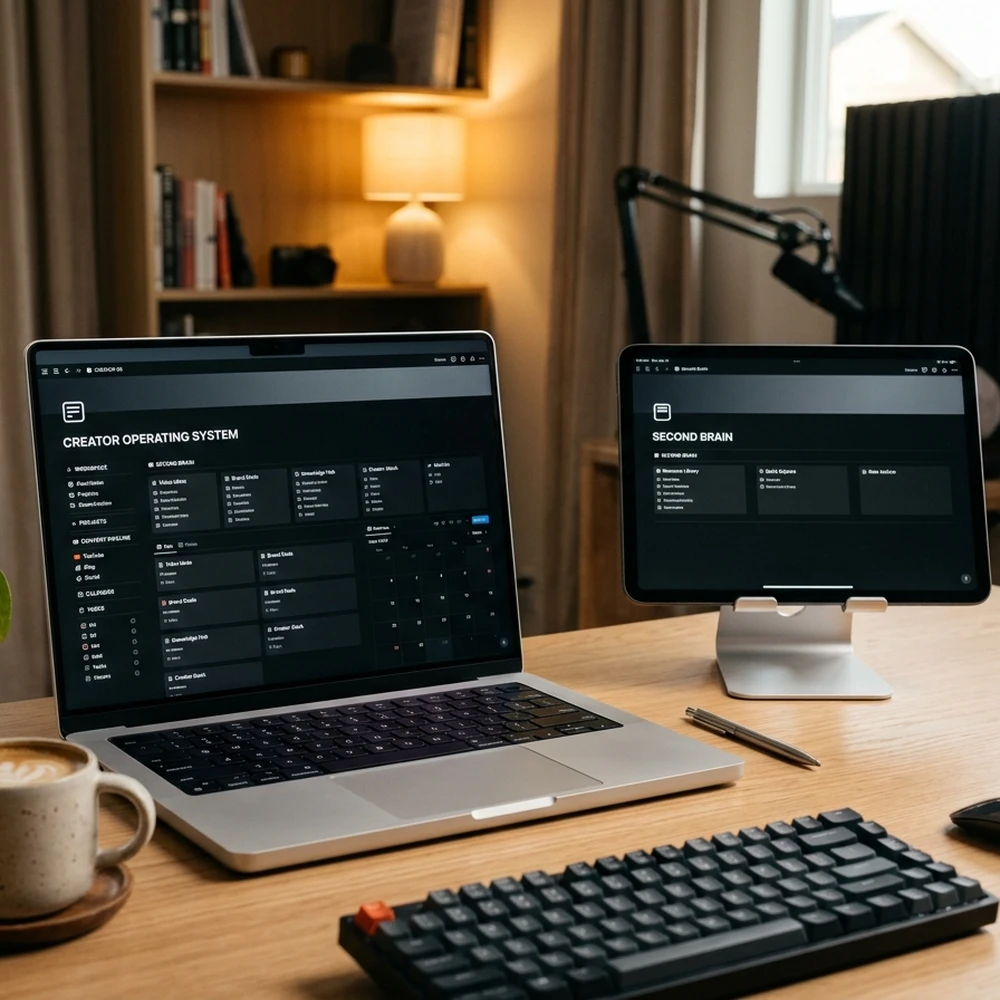
Second Brain Productivity System: The Ali Abdaal & Tiago Forte Creator OS Guide
Master the second brain productivity system with Tiago Forte's PARA method and Ali Abdaal's YouTube workflow template for modern content creators.
Read guide
Andy Grove High Output Management & OKR Goal Planning Guide
Master Andy Grove's High Output Management principles and OKR goal setting. Learn how the Intel CEO designed high-leverage organizational systems.
Read guide
Go deeper: guide series on this topic
 240 guides
Productivity Frameworks by Profession
Every productivity framework activates specific cognitive rhythms and structural boundaries, requiring disciplined alignment with your profession's core demands to achieve sustained high-performance execution without burnout.
 96 guides
Note-Taking Systems by Persona
Every personal knowledge system establishes specific cognitive pathways and structural boundaries, requiring disciplined alignment with your professional workflow to achieve sustained compounding expertise without cognitive fatigue.
From the blog
Latest articles




Topic Pillar
Mindful Productivity & Focus
Calm time-planning methods, priority checklists, and note-taking habits to get meaningful work done without stress.

Ask Yinyang Masters inside your AI assistant
Get the same calculations and guidance right in your chat: add the free Yinyang Masters app, then ask in plain English. No account needed.
Try asking: “Find a Yinyang Masters guide about starting a daily spiritual practice.”
Put it into practice
Digital tools for this topic
Interactive planners and journals that open in your browser, on phone or laptop.

Most popular
What shoppers search for most
Ranked by what people searched on Google over the last 4 weeks.
Go deeper
Guides on this topic


Keep exploring
More from Yin Yang Masters



Get Your Free 2027 Angel Number Year Map
Enter your birthday to reveal your 2027 Personal Year, the angel number guiding each month, and a private workspace to set your intentions.