


The Small Business Cash Flow & Profit Margin Framework


According to data published by the U.S. Small Business Administration (SBA), over 82% of small business failures are directly attributable to poor cash flow management. A business can boast record top-line revenue, robust order volume, and healthy customer acquisition, yet still spiral into insolvency if cash is tied up in slow-paying accounts receivable, excess inventory, or unmonitored recurring overhead.
Understanding the difference between accounting profit and real cash flow is the defining characteristic of a resilient business owner. This guide breaks down the essential mechanics of small business financial management, establishes a reliable Profit & Loss (P&L) monitoring cadence, and provides frameworks for calculating your exact operational break-even point.
1. Profit vs. Cash Flow: The Critical Distinction
Many first-time entrepreneurs conflate Net Income on an accrual P&L statement with Cash in the Bank. This dangerous misunderstanding causes acute liquidity crises:

- Net Profit: An accounting calculation representing Revenue earned minus Expenses incurred during a specific period. It does not reflect whether customers have actually paid their bills or when inventory invoices are due.
- Operating Cash Flow: The actual net movement of physical currency into and out of your commercial bank accounts.
If your agency or boutique consultancy books $50,000 in services this month with 30-day payment terms, your accounting statement shows $50,000 in revenue. However, if your payroll and software bills of $30,000 are due on the 15th, you will face an overdraft crisis unless you maintain an adequate liquid cash reserve.
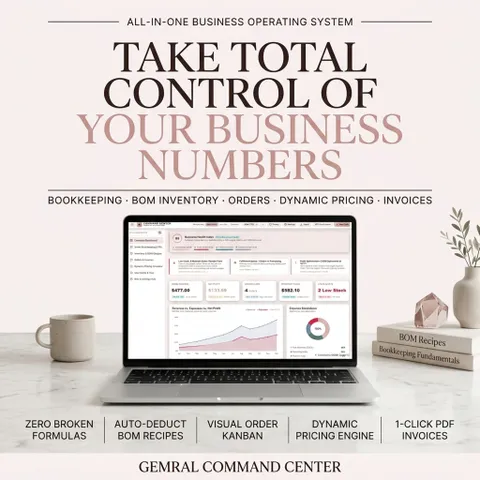
To track this discrepancy in real time without paying for complex accounting subscriptions, independent operators rely on standalone tools like the Small Business Operations & Financial Command Center.
Disclaimer: This interactive tool is intended for personal practice and informational purposes only, not professional financial or medical advice.

2. Calculating Your Operational Break-Even Point
Every business owner must know their exact Break-Even Point (BEP)—the minimum dollar volume of sales required to cover all fixed and variable costs without incurring a loss:
Break-Even Sales = Total Fixed Operating Expenses ÷ Contribution Margin Ratio
Where:
Contribution Margin Ratio = (Revenue - Variable Costs (COGS)) ÷ Revenue
Walkthrough Example:
- Fixed Monthly Overhead: $12,000 (Rent, base salaries, software, insurance, utilities).
- Average Order Value: $200
- Direct Variable Cost per Order: $60 (Merchant processing fees, packaging, labor).
- Contribution Margin per Order: $200 - $60 = $140 (70% margin).
- Break-Even Dollar Volume: $12,000 / 0.70 = $17,143 per month (or exactly 86 orders).
Knowing that your business requires $17,143 each month to achieve baseline survival allows you to set unambiguous daily and weekly sales benchmarks.

Get Your Free 2027 Angel Number Year Map
Enter your birthday to reveal your 2027 Personal Year, the angel number guiding each month, and a private workspace to set your intentions.
3. The 3 Financial Tiers of Small Business Budgeting
To ensure stability throughout seasonal cycles, business owners should organize their operating cash into three distinct operational accounts:
| Small Business Account Tier | Recommended Cash Buffer | Allocation Percentage of Revenue | Core Operational Purpose | Access Governance & Banking Controls |
|---|---|---|---|---|
| Tier 1: Operating Expense (OpEx) | 1.5 to 2.0 months of operating bills | 50% - 65% of net revenues | Covering day-to-day payroll, inventory vendor invoices, rent, and software | Active debit card & commercial checking |
| Tier 2: Tax & Regulatory Reserve | Projected tax liability | 20% - 30% of gross profits | Quarterly estimated taxes, state franchise fees, and annual audit retainers | Restricted transfers only; no debit card issued |
| Tier 3: Strategic Growth & Emergency | 3.0 to 6.0 months of fixed overhead | 10% - 20% of net profits | Absorbing acute revenue dips, seasonal slow months, and funding equipment CapEx | High-yield business savings / offline reserve |
4. Establishing a Weekly Cash Flow Rhythm
Managing cash flow is not an annual tax season exercise; it requires a disciplined weekly operational cadence:
- Every Monday Morning (Accounts Receivable Sweep): Review aging invoices. Immediately trigger automated reminders for balances past due 7, 14, or 30 days.
- Every Wednesday Midweek (Vendor Payables Review): Audit outgoing disbursements. Schedule vendor payments to take advantage of early-pay discounts while preserving operational cash until invoice due dates.
- Every Friday Afternoon (Weekly Cash Flash Report): Reconcile ending bank balances across all business accounts. Cross-reference personal net worth allocations using comprehensive financial dashboards like the Personal & Business Finance Command Center.
- End of Month (P&L Variance Review): Compare actual expenditures against budgeted forecasts. For service-based firms, monitor billing retainers and project burn rates using the Service Business Command Center.
Strategic Topic Frameworks & Practical Connections
To deepen your practical mastery and build an integrated operational workflow within this topic, explore these complementary guides:
- Implement the execution protocols in Warren Buffett 5/25 Rule & Avoid-At-All-Costs Planner Guide to systematically strengthen your foundational routine.
- Explore the strategic principles detailed in Alex Hormozi $100M Offers: Value Equation & The Rule of 100 Leads Guide for advanced optimization and mental clarity.
- Apply the structured methods from Commercial Real Estate Underwriting & Cap Rate Financial Modeling to maintain long-term momentum and consistency.
6. Conclusion
Mastering business finance is not about complicated corporate accounting; it is about building an unshakeable operational cash fortress. By enforcing disciplined tier allocations, calculating your exact break-even requirements, and utilizing transparent private financial systems, you protect your enterprise from insolvency and create the financial foundation for sustainable long-term expansion.
Explore verified real-time macro telemetry, market catalysts, and capital flow intelligence.
Interactive business financial models calculating operating cash flow velocity, burn rate limits, and debt coverage safeguards.
Net Profit is an accounting figure showing total earned revenue minus expenses over a period on an accrual basis, regardless of when cash is collected. Operating Cash Flow measures the real physical currency moving into and out of your company bank account. A business can be profitable on paper while becoming insolvent due to delayed client payments.
Research & References
- [1]U.S. Small Business Administration — Manage Your Finances ↗
- [2]IRS — Self-Employed Individuals Tax Center ↗
For comprehensive editorial standards and health/financial disclaimers, view our Editorial Policy.
Tools featured in this guide
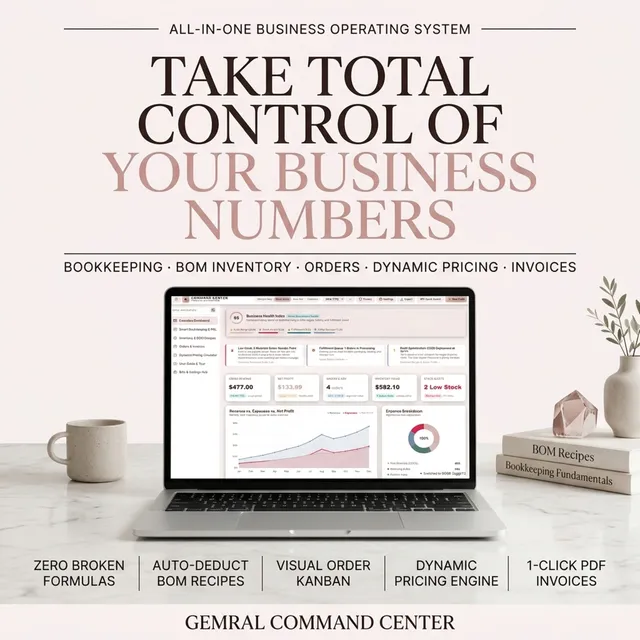
Small Business Command Center & Inventory Bookkeeping
All-in-one operating system for product makers, boutiques, and sellers to manage inventory, BOM costs, orders, and P&L.
$29₫629,000
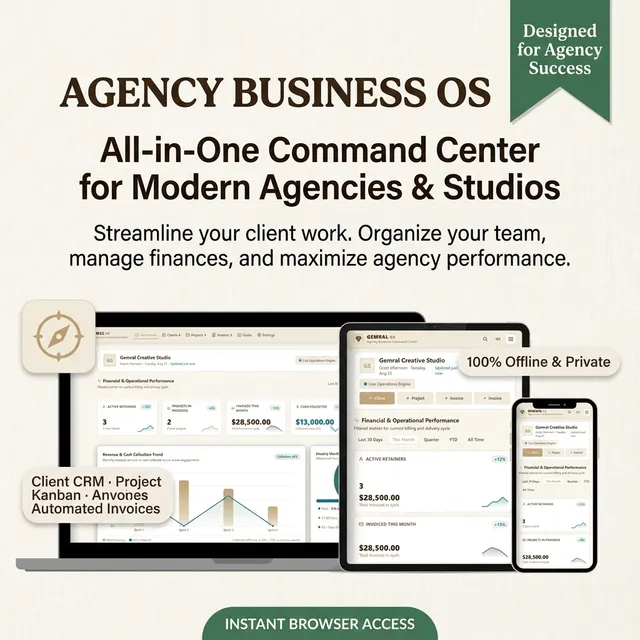
Agency Business OS & Interactive Client Portal
The all-in-one command center for creative agencies and boutique studios to manage clients, retainers, and billing.
$39₫849,000
Guides in this Topic
View all (17) →
F.I.R.E. Movement Early Retirement Rules & Calculator Guide
Master the F.I.R.E. movement early retirement rules. Calculate your 4% safe withdrawal rate, runway budget, and achieve sovereign financial independence.
Read guide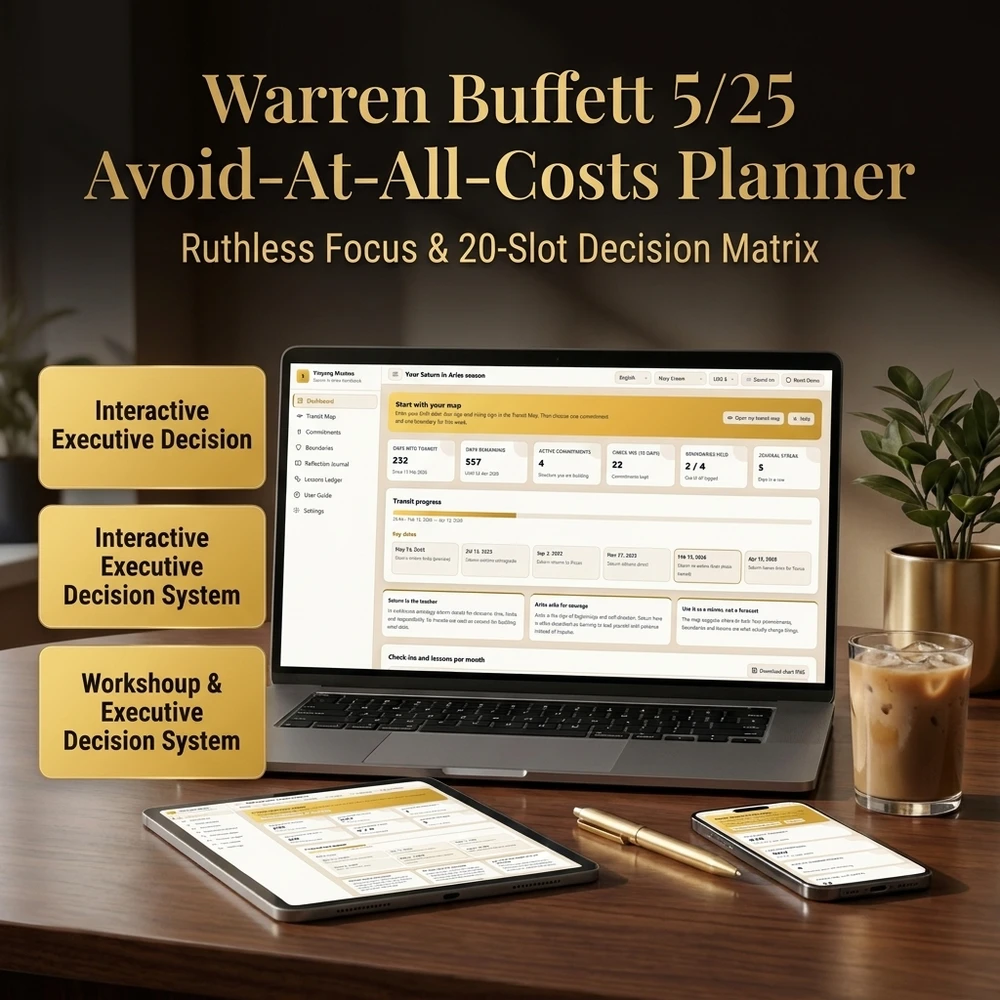
Warren Buffett 5/25 Rule & Avoid-At-All-Costs Planner Guide
Master Warren Buffett's 5/25 Rule and 20-slot punch card framework to eliminate seductive distractions and focus relentlessly on defining priorities.
Read guide
50/30/20 vs Zero-Based Budgeting: Complete Cash Flow Management Guide & Calculator
Compare the 50 30 20 budget rule against zero-based budgeting. Download templates, calculate cash flow allocations, and eliminate personal financial leaks.
Read guide
Alex Hormozi $100M Offers: Value Equation & The Rule of 100 Leads Guide
Master Alex Hormozi's $100M Offers value equation, Grand Slam offer architecture, and the Rule of 100 leads system to scale enterprise revenue.
Read guide
Commercial Real Estate Underwriting & Cap Rate Financial Modeling
Master commercial real estate underwriting. Learn Cap Rate calculation, Net Operating Income (NOI), Debt Service Coverage, and sensitivity modeling.
Read guide
Crypto Trading Journal Template & Systematic Risk Management Guide
Master crypto trading journal template practices. Track win rates, risk-reward ratios, drawdown metrics, and mental discipline for consistent performance.
Read guide
Go deeper: guide series on this topic

From the blog
Latest articles



Topic Pillar
Wealth, Business & Real Estate
Clear budgeting guides, mindful money habits, small business planning, and practical property checklists.

Ask Yinyang Masters inside your AI assistant
Get the same calculations and guidance right in your chat: add the free Yinyang Masters app, then ask in plain English. No account needed.
Try asking: “Find a Yinyang Masters guide about starting a daily spiritual practice.”
Put it into practice
Digital tools for this topic
Interactive planners and journals that open in your browser, on phone or laptop.


Most popular
What shoppers search for most
Ranked by what people searched on Google over the last 4 weeks.




Go deeper
Guides on this topic



Keep exploring
More from Yin Yang Masters




Get Your Free 2027 Angel Number Year Map
Enter your birthday to reveal your 2027 Personal Year, the angel number guiding each month, and a private workspace to set your intentions.