

John Bradshaw inner child work centers on reconnecting your adult self with the repressed childhood self shaped by shame and unmet developmental needs. Popularized through his 1990 book Homecoming and PBS workshop series, this approach helps adults reclaim curiosity while building steady internal safety in 10 minutes daily.
John Bradshaw Inner Child Work: Homecoming Stages, Exercises & Daily Reparenting

Jennie Uyên Chu
Chuyên gia Tâm thức & Năng lượng

Bài này hiện chỉ có bản tiếng Việt.
Ứng dụng thực hành tương tác · Bản trọn bộ15 phân hệ
Sổ Chữa Lành Đứa Trẻ Bên Trong & Nhật Ký Tha Thứ
Bạn tập đáp lại giọng chê trách trong đầu bằng sự dịu dàng và cảm thấy được chăm sóc hơn, nhìn rõ qua vòng chăm sóc 14 ngày.
Web app dùng trên điện thoại hoặc laptop. Trả lời câu hỏi chữa lành đứa trẻ bên trong, viết thư cho bé, thực hành tha thứ và nghe bài thiền dẫn. Không cần nhập ngày sinh.
👥 38.000+ học viên👥 38.000+ học viên · Cộng đồng 2,4M+
39 US$29,25 US$39 US$1.019.000 ₫764.000 ₫1.019.000 ₫Bước 1 · Chọn điều khiến bạn dễ bỏ dở nhất khi tự làm:
Cách ứng dụng tháo gỡ đúng điểm nghẽn này
Chín mươi câu hỏi nhẹ nhàng và 108 câu khẳng định giúp bạn đáp lại giọng nói cũ ấy bằng sự dịu dàng, từng ngày một.
Công cụ có sẵn bên trong: Chín mươi câu hỏi qua bốn chặng Nhận ra, Ôm lấy, Nuôi dưỡng lại và Tha thứ nhớ những câu bạn đã trả lời, nên bạn luôn biết bước nhẹ nhàng tiếp theo.
Bước 2 · Xem trực tiếp giao diện thật bên trong
Bảng Tha thứ & Thả lỏng
15 phân hệ · 2 tab mở thử miễn phíBảng viết giúp phân định giữa việc giữ ranh giới lành mạnh và buông gánh nặng oán giận theo đúng nhịp của bạn.
Trả 1 lần duy nhất · Dùng trọn đời · Nhận qua email tức thì

Bản Đồ Số Thiên Thần 2027 miễn phí
Nhận qua email Bản Đồ Số Thiên Thần 2027 kèm bảng tự tra Năm Cá Nhân, con số thiên thần từng tháng và chỗ viết ý định cả năm.
Understanding theory feels comforting for a weekend, yet nervous-system patterns shift only when warm insights become small, repeatable actions. Before trying the four structured exercises below, explore our inner child healing and forgiveness workbook guide to see how consistent daily prompts helped adults quiet reactive self-criticism over four to eight weeks.
Reflection Disclaimer: John Bradshaw's self-reparenting and expressive journaling exercises support personal self-awareness and emotional reflection. They are not therapy or medical care and do not replace licensed mental-health treatment.
John Bradshaw Inner Child Work: The WONDER Child vs Wounded Adaptation
In John Bradshaw's model, every adult carries both a natural WONDER child and an adaptive wounded child formed during early stress. Separating authentic curiosity from shame-driven survival rules within 5 minutes of reflection helps interrupt automatic emotional spirals before they dictate adult relationships.
Many readers first discover the inner child concept through clips of Bradshaw's televised workshops or Oprah Winfrey interviews, where he challenged the idea that emotional maturity means burying vulnerability. Rather than viewing childhood triggers as personal weakness, his model distinguishes two contrasting internal states:
- The WONDER Child (Natural Vitality): Bradshaw's acronym stands for Wonder, Optimism, Naivete (innocence), Dependence (healthy trust), Emotions, and Resilience. This part drives playful creativity, spontaneous laughter, honest grief, and open-hearted curiosity when no threat is present.
- The Wounded Child (Shame-Based Adaptation): When caregivers are chronically distracted, harsh, or unpredictable, a child learns what Bradshaw called toxic shame—the belief that "I am a mistake" rather than "I made a mistake." Over decades, that unexamined fear masks itself as perfectionism, people-pleasing, emotional numbness, or sudden defensiveness.
- The Adult Protector (Conscious Champion): Unlike biological parents who may have lacked time or self-awareness, your present-day adult self possesses full agency, clean boundaries, and calm discernment to validate feelings without obeying panic.
Notice how closely shame-driven masks overlap with repressed emotions discussed in Carl Jung's shadow work and inner child healing guide. When toxic shame pushes natural anger or neediness underground, daily reflection brings those disowned reactions back into steady adult care.
Công cụ tra cứu miễn phí
Tính Số Đường Đời Thần Số Học
Trả lời nhanh
Có. Sổ Chữa Lành Đứa Trẻ Bên Trong & Nhật Ký Tha Thứ — Bộ Nuôi Dưỡng Lại Bản Thân Dạng Web App được làm cho đúng việc này: Trả lời 90 câu hỏi nhẹ nhàng qua bốn chặng Nhận ra, Ôm lấy, Nuôi dưỡng lại và Tha thứ, theo nhịp của bạn.
 Sổ Chữa Lành Đứa Trẻ Bên Trong & Nhật Ký Tha Thứ — Bộ Nuôi Dưỡng Lại Bản Thân Dạng Web AppXem Sổ tay Tương tác →
The Four Developmental Stages in John Bradshaw's Homecoming Framework
Bradshaw organized childhood emotional development into four distinct stages—infancy, toddlerhood, preschool, and school-age—spanning ages 0 through 12. Pinpointing which specific developmental task stalled in 15 minutes of structured review reveals why present-day triggers flare around trust, autonomy, guilt, or comparison.
Drawing on developmental psychology, Homecoming maps each childhood window to a core emotional anchor and a recognizable adult pattern when that stage goes unmet:
- Stage 1 — Infant Trust (Ages 0 to 1): Healthy caregiving builds basic nervous-system safety through reliable responsiveness to hunger, warmth, and distress. When early attunement was inconsistent, adults often experience chronic hypervigilance, fear of intimacy, or difficulty resting without expecting sudden abandonment.
- Stage 2 — Toddler Autonomy (Ages 1 to 3): Testing "no," exploring physical space, and recovering from small spills builds clean personal agency. When curiosity met shaming anger or rigid control, adults tend to swing between rebellious stubbornness and compulsive compliance.
- Stage 3 — Preschool Initiative (Ages 3 to 6): Imaginative play, asking endless questions, and feeling welcomed in family life shapes healthy emotional expression. If a young child felt invisible or blamed for parental tension, adult life often brings silent guilt whenever choosing personal joy.
- Stage 4 — School-Age Industry & Identity (Ages 6 to 12): Learning rules, social belonging, and real-world competence fosters steady self-esteem. Harsh comparison or conditional affection during these years frequently produces an unforgiving inner critic, imposter patterns, and workaholic exhaustion.
Instead of trying to fix every memory at once, focus on one recurring adult friction point per week and trace which of the four stages it echoes. You can pair that weekly audit with targeted inner child healing journal prompts to keep insights grounded in concrete present-day choices.
Homecoming Book vs Loose PDFs vs Guided Inner Child Workbooks
Readers researching Bradshaw's work often debate between reading his 304-page Homecoming paperback, downloading loose free PDFs, or using a structured interactive workbook. Matching your current routine to the right medium prevents common drop-off after day 3 of solo reflection.
Conceptual books build essential language for recognizing family dynamics, yet reading alone rarely tracks how your needs or emotional reactivity shift over a 30-day cycle. Comparing four widely used formats clarifies which tool solves which practical bottleneck:
| Format | Core Mechanism | Best Fit For | Time Per Session | Key Practical Limitation |
|---|---|---|---|---|
| Homecoming Book & Lecture Series | Developmental theory, clinical case narratives, and guided reading meditations | First-time conceptual understanding and reducing personal shame | 25–40 minutes reading | Passive format; lacks interactive logs for daily needs or longitudinal mood tracking |
| Loose Printable PDF Worksheets | Single-session fill-in checklists and static non-dominant hand prompt sheets | One-weekend awareness check or print-and-discard reflection | 15–30 minutes once | Pages scatter easily; offers zero continuity between triggers, letters, and boundaries |
| Interactive Inner Child Workbook Web App | 4-stage structured questions, childhood photo letter cards, 8-need ledger, and voiced audio | Adults building a steady 10-minute private reparenting rhythm | 10–15 minutes daily | Requires quiet personal honesty and consistent daily check-ins for 14–30 days |
| Standalone Meditation Scripts | Guided visualization meeting younger developmental ages in calm imagery | Evening nervous-system settling and emotional warmth | 10–15 minutes listening | Can feel ungrounded unless paired with clear adult action and protective limits |
If you prefer a private digital sanctuary over loose paper printouts, compare calm offline options in our guide to a dedicated shadow work journal app. Keep every practice centered on small, verifiable habits that respect your energy and current support network.
4 Core John Bradshaw Inner Child Exercises and Daily Meditation Script
Bradshaw's core recovery practices center on non-dominant hand letter writing, developmental age validation, grief release, and guided adult sanctuary imagery. Spending 10 to 12 focused minutes each evening lets your grounded adult voice guide the conversation without slipping into overwhelm.

To hold every thread together in one private space, the Inner Child Healing Workbook & Forgiveness Journal connects a 14-day Sanctuary care ring with 90 questions across four stages—Recognize, Embrace, Reparent, and Forgive. Inside the same workspace, Letters to Little Me lets you pair a childhood photo with structured prompts, a childhood needs log tracks eight core needs, the forgiveness journal counts the four Ho'oponopono phrases alongside a clear boundary line, and the 12-minute voiced guided meditation Coming Home to Little You helps settle busy nights gently.
Whenever sharp present-day interpersonal triggers keep setting off defensive anger or perfectionist armor alongside childhood vulnerability, the Shadow Work & Sound Healing Journal helps log each trigger, rate somatic intensity before and after from 0 to 10, explore twelve guiding questions, and unwind with two original instrumental tracks tuned in 432 Hz and 528 Hz.
Before You Begin: The 30-Second Somatic Reset
Never begin deep memory work while your chest feels tight or your inner critic sounds loud and urgent. Spend 30 seconds physically down-regulating first: perform two physiological sighs—inhale steadily through your nose, take a quick second top-up sniff to expand the lungs, then release a long six-second exhale through relaxed lips—followed by quiet somatic orienting as you silently name three ordinary colors or textures in the room around you.
Once your shoulders drop and your breath feels unhurried, follow these four structured reparenting exercises inspired by Bradshaw's framework:
- Exercise 1 — The Dominant / Non-Dominant Hand Letter Dialogue (Minutes 1–5): One of Bradshaw's signature tools in Homecoming uses opposite-hand writing to bypass intellectual perfectionism. Using your dominant adult hand, write a simple caring question: "Dear little me, what felt too heavy or lonely for you today?" Switch the pen to your non-dominant hand and let blunt, short phrases appear slowly without fixing spelling or trying to sound polished.
- Exercise 2 — Naming One Unmet Developmental Stage & Core Need (Minutes 6–7): Read the opposite-hand reply with patient adult eyes. Identify whether the soreness echoes Stage 1 safety, Stage 2 healthy limits, Stage 3 permission to play, or Stage 4 quiet approval, and pick one of the eight everyday needs—safety, being seen, comfort, play, praise, being heard, rest, or healthy limits—to honor today.
- Exercise 3 — Championing & Protective Adult Validation (Minutes 8–9): Switch back to your dominant hand and write three firm sentences as the reliable protector your younger self deserved: "It makes complete sense that seven-year-old you felt scared then. You did not cause adult stress, and you were never too much. Today I am in charge, and we do not stay in rooms where we have to shrink."
- Exercise 4 — Five-Minute "Safe Place & Present Mentor" Meditation Script (Minutes 10–12): Close your eyes, rest one hand gently over your chest, and silently walk through this short script: "Picture a calm room filled with warm natural light where no one is rushing or judging. Notice your younger self sitting by the window at the age that showed up tonight. Sit beside them at eye level, offer one reassuring smile, and let them know they do not have to carry adult worries anymore. Take three slow breaths together, promise one concrete kind action for tomorrow, and return your focus to the weight of your feet on the floor."
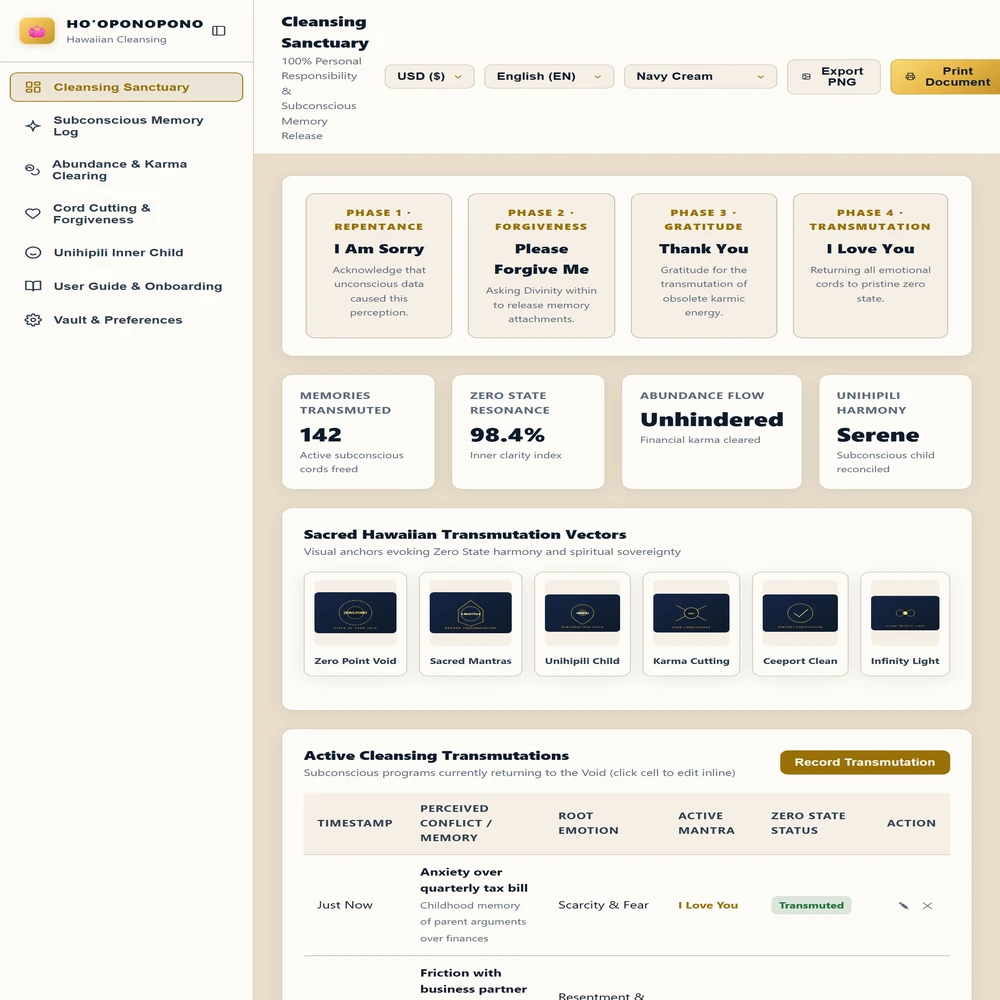
If grief or resentment toward early caregivers resurfaces during step three, keep release clearly separated from renewed access using the structured approach in our Ho'oponopono Hawaiian forgiveness practice guide. Continue building consistency through our step-by-step guide on how to reparent your inner child—small kept promises build deeper emotional steadiness than rare intense breakthroughs.
Công cụ tra cứu miễn phí cùng chủ đề

Áp dụng ngay
Đưa bài viết này vào thực hành
Hơn 8 năm nay, cộng đồng hàng triệu người (2,4 triệu+ người theo dõi, 38.000+ học viên) đã kể lại những thay đổi thật khi kiên trì thực hành mỗi ngày.
 Sổ Chữa Lành Đứa Trẻ Bên Trong & Nhật Ký Tha Thứ — Bộ Nuôi Dưỡng Lại Bản Thân Dạng Web App
- Một web app thay cho cuốn sổ bài tập, hộp thư và ứng dụng thiền: câu hỏi, thư gửi bé, sổ nhu cầu, nhật ký tha thứ và bài thiền có giọng đọc nằm chung một chỗ, dùng được trên điện thoại hay laptop.
- Trả lời 90 câu hỏi nhẹ nhàng qua bốn chặng Nhận ra, Ôm lấy, Nuôi dưỡng lại và Tha thứ, theo nhịp của bạn.
- Viết thư cho bé ngày xưa kèm ảnh tuổi thơ và ghi lại mỗi ngày bạn đáp ứng nhu cầu nào trong tám nhu cầu thời thơ ấu.
 Sổ Shadow Work & Chữa Lành Bằng Âm Thanh — Nhật Ký Cơn Kích Hoạt & Tần Số Solfeggio
- Ghi từng cơn kích hoạt kèm cảm giác trên cơ thể, mức độ trước và sau (0–10) và công cụ bạn đã dùng.
- Xem biểu đồ hằng tuần và bảng xếp hạng công cụ cho biết điều gì thật sự giúp bạn dịu lại.

Có trong cửa hàng
Sổ Bài Tập Đứa Trẻ Bên Trong
Nhẹ nhàng nuôi dưỡng lại đứa trẻ ngày xưa của bạn. Trả lời 90 câu hỏi chữa lành, viết thư cho bé, đáp ứng nhu cầu thời thơ ấu và thực hành tha thứ cùng bài thiền dẫn.
Nguồn tham khảo & Đối chiếu
- [1]Wikipedia — John Bradshaw (author) ↗
- [2]Wikipedia — Inner Child ↗
- [3]Wikipedia — Reparenting ↗
- [4]Wikipedia — Self-Compassion ↗
Được biên tập theo chuẩn thực hành chánh niệm & phát triển cá nhân. Chính sách biên tập

Bộ Sổ Tay & Hệ Thống Tương Tác Đi Kèm


Câu chuyện thật
Xem mọi câu chuyện →Người đọc đã thay đổi thế nào với những thực hành này
Hơn 8 năm nay, cộng đồng hàng triệu người (2,4 triệu+ người theo dõi, 38.000+ học viên) đã kể lại những thay đổi thật khi kiên trì thực hành mỗi ngày.
 Chuyện tình yêu
Nhật ký Twin Flame có hiệu quả không? Câu chuyện thật
Nhật ký twin flame có hiệu quả không? Câu chuyện thật về chữa lành sau chia tay, thu hút tri kỷ, tìm lại bình yên và cách luyện tập mỗi ngày.
Xem cẩm nang Chuyện tiền bạc
Nhật ký thu hút tiền bạc có hiệu quả không? Chuyện thật
Nhật ký thu hút tiền bạc có hiệu quả không? Câu chuyện thật về trả hết nợ, xin tăng lương, bớt lo âu tiền bạc và cách luyện tập mỗi ngày.
Xem cẩm nang
 Chuyện tình yêu
Thu hút tình yêu sau chia tay: chuyện chữa lành có thật
Câu chuyện thật về thu hút tình yêu sau chia tay: dùng câu khẳng định yêu bản thân, soi gương và nhật ký tình yêu để chữa lành trước rồi mở lòng lại.
Xem cẩm nang Chuyện tiền bạc
Thu hút cuộc sống sạch nợ: câu chuyện thật
Câu chuyện thật về thu hút cuộc sống sạch nợ: kết hợp câu khẳng định tiền bạc, nhật ký thịnh vượng với mục tiêu rõ, hạn chót và bằng chứng mỗi ngày.
Xem cẩm nang Chuyện tình yêu
Thu hút tri kỷ: câu chuyện thật bắt đầu từ bên trong
Câu chuyện thật về thu hút tri kỷ: viết kịch bản người bạn đời lý tưởng, làm bảng tầm nhìn và mở lòng với cuộc sống trước khi tình yêu đến.
Xem cẩm nang Chuyện tiền bạc
Thu hút tăng lương: câu chuyện thật về sự tự tin
Câu chuyện thật về thu hút tăng lương, thăng chức: gỡ niềm tin cản trở, luyện câu khẳng định tự tin và ghi bằng chứng trước khi đề nghị.
Xem cẩm nang Chuyện tình yêu
Câu chuyện đoàn tụ twin flame: hành trình thật về bình yên
Câu chuyện đoàn tụ twin flame có thật: dùng các giai đoạn hành trình, sổ dấu hiệu và thiền dẫn để tìm bình yên khi xa cách, dù có quay lại hay không.
Xem cẩm nang Chuyện tiền bạc
Từ lo âu tiền bạc đến bình tâm: câu chuyện thật
Câu chuyện thật về vượt qua lo âu tiền bạc: một bài thiền ngắn trước khi xem tài khoản, buổi hẹn hò với tiền mỗi tuần và soi lại niềm tin cũ.
Xem cẩm nang
Hướng dẫn liên quan

Bài viết khác



Đang được đọc nhiều
Bài mọi người mở nhiều nhất tuần này
Xếp theo lượt xem thật trong 7 ngày qua.




🔥 Bắt đầu Ngày 1 ngay tối nay · Mua 1 lần dùng mãi
Sổ Chữa Lành Đứa Trẻ Bên Trong & Nhật Ký Tha Thứ — Bộ Nuôi Dưỡng Lại Bản Thân Dạng Web App
Web app riêng tư với 15 không gian chữa lành: sổ bài tập 90 câu hỏi qua 4 chặng, thư gửi bé ngày xưa kèm ảnh tuổi thơ, sổ nhu cầu thời thơ ấu, nhật ký tha thứ có bộ đếm Ho'oponopono và một bài thiền dẫn có giọng đọc.
TÀI LIỆU TƯƠNG TÁC MIỄN PHÍ
Nhận Miễn Phí Bản Đồ Số Thiên Thần Năm 2027
Nhận qua email Bản Đồ Số Thiên Thần 2027 kèm bảng tự tra Năm Cá Nhân, con số dẫn đường từng tháng và góc riêng viết ý định cả năm.
Theo dõi Yin Yang Masters
Nghi thức mỗi ngày ngay trên bảng tin của bạn
Hướng dẫn ngắn, nghi thức theo trăng và cách dùng sổ kế hoạch từ Yin Yang Masters.



Khám phá thêm
Thêm từ Yin Yang Masters



Hỏi Yinyang Masters ngay trong trợ lý AI của bạn
Nhận cùng phép tính và gợi ý ngay trong khung chat: thêm app Yinyang Masters miễn phí rồi hỏi bằng lời thường. Không cần tài khoản.
Thử hỏi: “Tìm bài hướng dẫn Yinyang Masters về bắt đầu thực hành tâm linh mỗi ngày.”

Đang trực
Gặp Moon Keeper, người giữ điện thờ trực tiếp
Mỗi giờ Moon Keeper đọc bầu trời, rút một lá tarot và chia sẻ một bài tĩnh tâm 3 phút. Ghé điện thờ, theo dõi nhật ký từng giờ và để lại lời nhắn trong sổ khách.

BẢN TIN MIỄN PHÍ MỖI NGÀY
Nhận Bản Tin Yin Yang Masters Mỗi Ngày
Mỗi ngày một email ngắn: một thực hành cho hôm nay, một câu chuyện thật của bạn đọc và bài hướng dẫn mới nhất về tình yêu, tiền bạc, sự bình an.
Suốt hơn 8 năm qua, cộng đồng hơn 2,4 triệu người theo dõi và 38.000+ học viên đã chia sẻ kết quả thật khi duy trì những thực hành này trong tình yêu, tài chính và sự bình an.