

Ho'oponopono for Sleep: A 4-Phrase Bedtime Routine


本文目前仅有越南语版本,中文版正在翻译中。
阴影工作日记与声音疗愈指南
你会弄清真正触发自己的是什么,并通过每周图表知道哪种方法最快让你平静下来。
网页应用,手机或电脑都能用。记录触发点,回答阴影工作提问并播放聆听音轨。无需填写出生日期。
第 1 步 · 点击你平时最容易半途而废的痛点:
这套应用如何帮你彻底解决
触发记录写下是什么点燃你、什么让你平复,旧模式终于开始松手。
内含对应工具: 每个主题收拢你反复出现的反应和恐惧,让你看到规律,而不只是一个个糟糕的日子。
第 2 步 · 直观查看应用真实模块界面
统一管理当前处理的阴影议题、情绪波动轨迹及各引导模块入口。
一次买断 · 终身可用 · 付款后即刻发送至邮箱

免费领取 2027 天使数字年度地图
通过邮件领取《2027 天使数字年度地图》,内附 2027 个人年速查、每个月的天使数字与全年意图书写空间。
Ho'oponopono for sleep is a 10-minute bedtime routine that repeats four short phrases (I love you, I'm sorry, please forgive me, thank you) for 12 slow rounds, so the last thing your mind rehearses is release instead of replay. It pairs a Hawaiian reconciliation practice with a 4-minute pace and a 30-second breathing reset. It is a calming ritual, not a sleep treatment. For the full background, read the Ho'oponopono cleansing and forgiveness guide.
Most people reach for Ho'oponopono at night because the mind gets loudest in bed: an awkward conversation, an unpaid bill, a message left on read. The four phrases give that loop a script with an ending. Below you get the exact routine, a pacing table, a 7-night log you can copy into any notebook, and the limits of what a bedtime practice can do.
Ho'oponopono for Sleep: The 4-Phrase Bedtime Routine
The routine takes 10 minutes from lights-dim to lights-out. Twelve rounds of the four phrases at a slow pace last about 4 minutes; the rest of the time goes to setup and a quiet close. Keep the sequence identical every night, because a repeated cue is what turns a practice into a bedtime signal.
- Minutes 0 to 2, set the room. Dim the lights, put your phone out of arm's reach, and sit or lie down in your usual sleep position.
- Minute 2, name one thing. Pick the single memory, person, or worry that is loudest right now. Name it in one short sentence, such as "the argument at lunch." Only one item per night.
- Minutes 2 to 6, say the four phrases. Say each phrase silently on a slow exhale: "I love you. I'm sorry. Please forgive me. Thank you." That is one round. Complete 12 rounds, about 20 seconds each.
- Minutes 6 to 8, stay with the sensation. Stop the words. Notice where the memory sits in your body, whether chest, jaw, or stomach, and let your attention rest there without trying to change it.
- Minutes 8 to 10, close the container. Say "that is enough for tonight," turn over, and let the practice end. You do not need to feel different for it to count.
The phrases are aimed at your own replay loops, not at the other person. In this practice you are not confessing to something you did not do; you are acknowledging the memory that keeps playing and offering it a way to wind down.
免费在线测算工具
生命灵数计算器
快速解答
有。阴影工作日记与声音疗愈指南 — Shadow Work Journal & Sound Healing Guide,触发记录与 Solfeggio 频率正是为此设计:记录每次被触发时的身体感受、前后强度(0–10)和使用的方法。
 阴影工作日记与声音疗愈指南 — Shadow Work Journal & Sound Healing Guide,触发记录与 Solfeggio 频率查看交互式手册 →
Ho'oponopono Prayer for Sleep: Pacing, Breath, and a 7-Night Log
Fast repetition keeps the mind busy, and a busy mind is the opposite of what you want at 11 p.m. Pace the words to your exhale, and use a short breathing reset first if your body feels wired.
The 30-Second Somatic Reset (do this before round one)
Take two quick sips of air through the nose, then one long, slow exhale through the mouth. Repeat for 30 seconds, then let your eyes rest on three fixed points in the room, such as the door frame, the lamp, and the window edge. A randomized controlled study in Cell Reports Medicine found that 5 minutes a day of exhale-focused "cyclic sighing" for one month improved mood and lowered breathing rate more than the same time spent in mindfulness meditation. The study measured mood and arousal, not sleep, so treat the reset as a way to lower the volume before the words begin.
Pacing table
| Moment | Pace | What you are doing |
|---|---|---|
| Rounds 1 to 4 | About 6 seconds per phrase | Matching each phrase to one full exhale |
| Rounds 5 to 8 | About 5 seconds per phrase | Letting the rhythm settle without speeding up |
| Rounds 9 to 12 | About 4 seconds per phrase | Dropping the effort; words get quieter |
| After round 12 | No words | Resting attention on the body sensation |

The 7-night bedtime log
One line per night is enough. Rate how busy your mind feels on a 1 to 5 scale before and after, where 5 is "racing." After 7 nights you have a personal baseline instead of a guess.
| Night | Item you named | Rounds done | Mind-busy before (1-5) | Mind-busy after (1-5) | Note |
|---|---|---|---|---|---|
| 1 | 12 | ||||
| 2 | 12 | ||||
| 3 | 12 | ||||
| 4 | 12 | ||||
| 5 | 12 | ||||
| 6 | 12 | ||||
| 7 | 12 |
If your "after" score does not drop by at least 1 point on 4 of the 7 nights, change one variable only: shorten to 6 rounds, move the practice 30 minutes earlier, or swap the spoken words for a silent count. Changing one thing at a time tells you which adjustment worked.
Action, then release
If the item you named needs a real step, such as an email or a payment, write that one step on paper before the rounds, then put the paper face down. The practice is for the replay, the paper is for the task. Closing the loop on paper keeps you from checking the result in bed.
What Ho'oponopono Meditation Is (and Where the Four Phrases Come From)
Ho'oponopono is a Hawaiian practice whose name translates to "to make right." In its traditional form it was a family gathering where relatives talked through a broken relationship until it was repaired, sometimes daily or weekly. As described on the Ho'oponopono entry, a healing practitioner named Morrnah Simeona adapted it in 1976 into a private, self-directed method, and the four-phrase version became widely known through psychologist Ihaleakala Hew Len and the 2007 book Zero Limits.
That history matters for one practical reason: the phrase order is not fixed. Some teachers begin with "I love you," others with "I'm sorry." Pick one order and keep it for all 7 nights, because consistency matters more than the particular sequence.
Treat the practice as a reflective ritual. The claim that it changes outside events is a belief, not a measured result, and this routine does not depend on it. What the routine does offer is a repeatable 10-minute structure for ending the day with forgiveness language instead of rumination.
Ho'oponopono for Insomnia and Deep Sleep: What to Expect and When to Get Help
A bedtime ritual can make winding down easier, and it can sit alongside ordinary sleep hygiene: a regular bedtime, a dim room, and no screens in the last 30 minutes. It is not a treatment for insomnia. Chronic insomnia is generally defined as trouble sleeping at least 3 nights a week for at least 3 months, and that pattern deserves a conversation with a doctor or sleep specialist, not another ritual.
| What you notice | Reasonable response |
|---|---|
| Mind slows within 10 to 20 minutes | Keep the routine as written |
| Phrases feel forced or irritating | Drop to 6 rounds or use silent breathing only |
| Strong emotion rises (tears, tight chest) | Stop the words, breathe, and write one line in your log |
| Poor sleep 3 nights a week for 3 months | Book an appointment with a clinician |
If a particular memory is heavy enough that it returns every night, such as grief or a painful relationship, a licensed counselor is a better partner for it than a bedtime phrase. The routine is a gentle support, and it works best on ordinary daily friction.
Ho'oponopono Music and Sleep Talk-Downs: Audio Without the Overstimulation
Many people ask about playing Ho'oponopono music or a guided talk-down. Audio can help you keep a steady pace, with two limits. Choose tracks with no sudden volume changes, and set a sleep timer for 20 to 30 minutes so the recording ends before you do. Playing the phrases all night is not part of this routine; the practice is the 10 minutes you take part in, not a loop running in the background.
Your own voice, even in a whisper, is the stronger anchor because it ties the words to your exhale. Use a recording only to learn the rhythm, then switch to silent practice by night 4. If you want a gentler way to approach the forgiveness side of the practice during the day, the forgiveness workbook post covers journaling prompts, and the inner child meditation script pairs well with an evening wind-down. For more on how daily practices shape your state, see what is my vibrational frequency.
同主题免费在线测算工具
马上实践
把这篇文章用起来
8多年来,超过240万名关注者和3.8万+名学员组成的社群,分享了坚持这些练习后在爱情、财富和内心平静上的真实变化。
 阴影工作日记与声音疗愈指南 — Shadow Work Journal & Sound Healing Guide,触发记录与 Solfeggio 频率
- 一个网页应用取代日记本和一堆音乐文件:触发记录、阴影地图、书写练习和索尔费吉奥聆听库都在一处,手机或电脑都能用。
- 记录每次被触发时的身体感受、前后强度(0–10)和使用的方法。
- 每周图表和方法排行告诉你什么真正能让你平静。
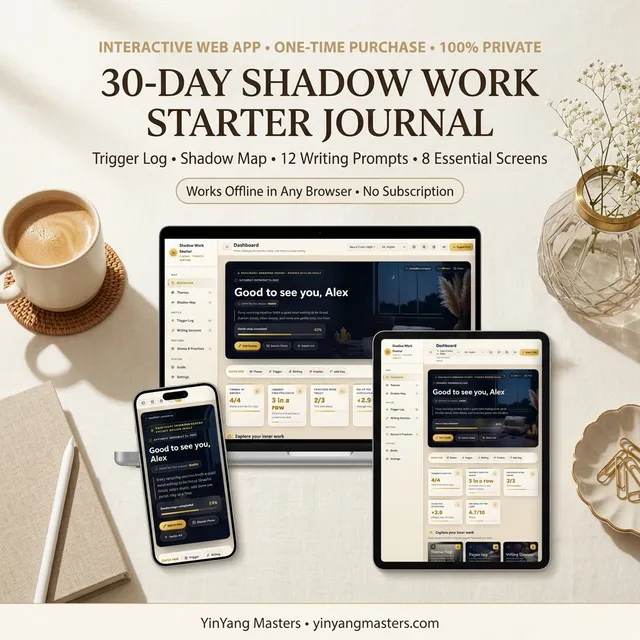
 30 天阴影功课入门日志 — 触发记录、阴影地图与书写提示
- 记录触发你的事,以及之前和之后 0 到 10 的强度,看看哪个方法最能让你缓和。
- 为你内在会起反应的部分命名,记下每个部分讲的旧故事和它需要什么,并看它出现的次数。
参考来源与核验资料
- [1]Ho'oponopono — Wikipedia ↗
- [2]Sleep hygiene — Wikipedia ↗
- [3]Insomnia — Wikipedia ↗
- [4]Brief structured respiration practices enhance mood and reduce physiological arousal (Cell Reports Medicine, 2023) ↗
依据正念实操与个人成长编辑规范审校。 编辑政策
配套交互式手册与系统

读者如何因这些练习而改变
8多年来,超过240万人的社群一直在用这套练习,3.8万+名学员也陆续分享了自己的结果。
 爱情故事
双生火焰日记有用吗?真实故事与每日练习
双生火焰日记真的有用吗?分享走出分手、迎来灵魂伴侣、找回平静的真实经历,并展示每天的练习在日记里是什么样子。
阅读指南 金钱故事
金钱显化日记有用吗?真实故事
金钱显化日记真的有用吗?分享还清欠款、争取加薪、缓解金钱焦虑的经历,并展示每天的练习在日记里是什么样子。
阅读指南
 爱情故事
分手后如何显化爱情:真实疗愈故事
分手后如何显化爱情?分享人们如何用自爱肯定语、照镜子练习和爱情日记先疗愈自己,再重新敞开心扉的真实经历。
阅读指南 金钱故事
显化无债生活:稳步还清欠款的真实故事
如何显化无债生活?分享人们如何把金钱肯定语、丰盛日记与清晰目标、截止日期和每日证据结合起来,稳步走向无债。
阅读指南 爱情故事
显化灵魂伴侣:从内在开始的真实故事
如何显化灵魂伴侣?分享人们如何写下理想伴侣脚本、制作爱情愿景板,并在爱到来之前先对生活说“好”。
阅读指南 金钱故事
显化加薪:自信开口的真实故事
如何显化加薪或升职?分享人们如何清理金钱信念、练习自信肯定语,并在开口前记录下自己的成绩。
阅读指南 爱情故事
双生火焰重逢故事:走向平静的真实旅程
真实的双生火焰重逢故事:人们如何借助旅程阶段、征兆记录和引导冥想,在分离期间找回平静,无论最终是否重逢。
阅读指南 金钱故事
从金钱焦虑到与钱和解:真实故事
分享缓解金钱焦虑的经历:查看账户前听一段简短的引导冥想,每周一次金钱约会,并温和地审视旧信念。
阅读指南
相关指南

更多文章


热门内容
本周读者最常打开的内容
按过去 7 天的真实访问量排序。





免费领取 2027 天使数字年度地图
通过邮件领取《2027 天使数字年度地图》,内附 2027 个人年速查、每月指引天使数字与专属年度意图书写空间。
关注我们
每天的仪式,就在你的动态里
Yin Yang Masters 的简短指南、月相仪式和计划本使用教程。




在 AI 助手中直接询问 Yinyang Masters
在聊天中获得同样的计算与指引:添加免费的 Yinyang Masters 应用,然后用日常语言提问。无需注册账号。
试着问: “找一篇关于开始每日灵性练习的 Yinyang Masters 指南。”
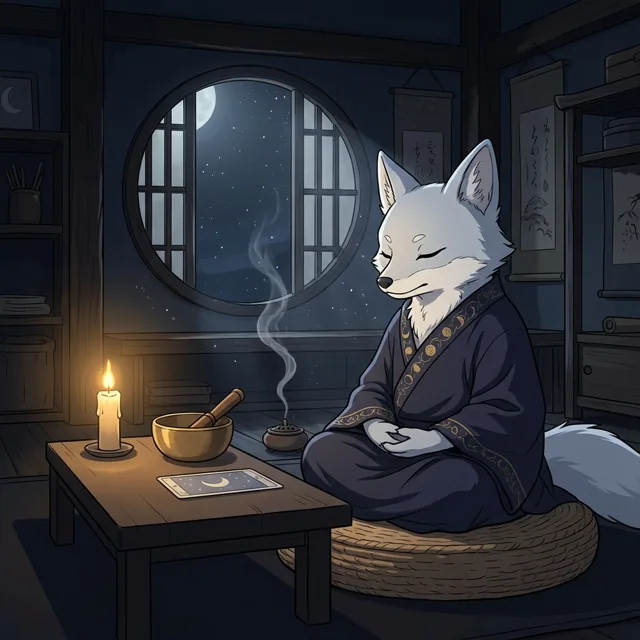
认识 Moon Keeper,我们的直播祭坛守护者
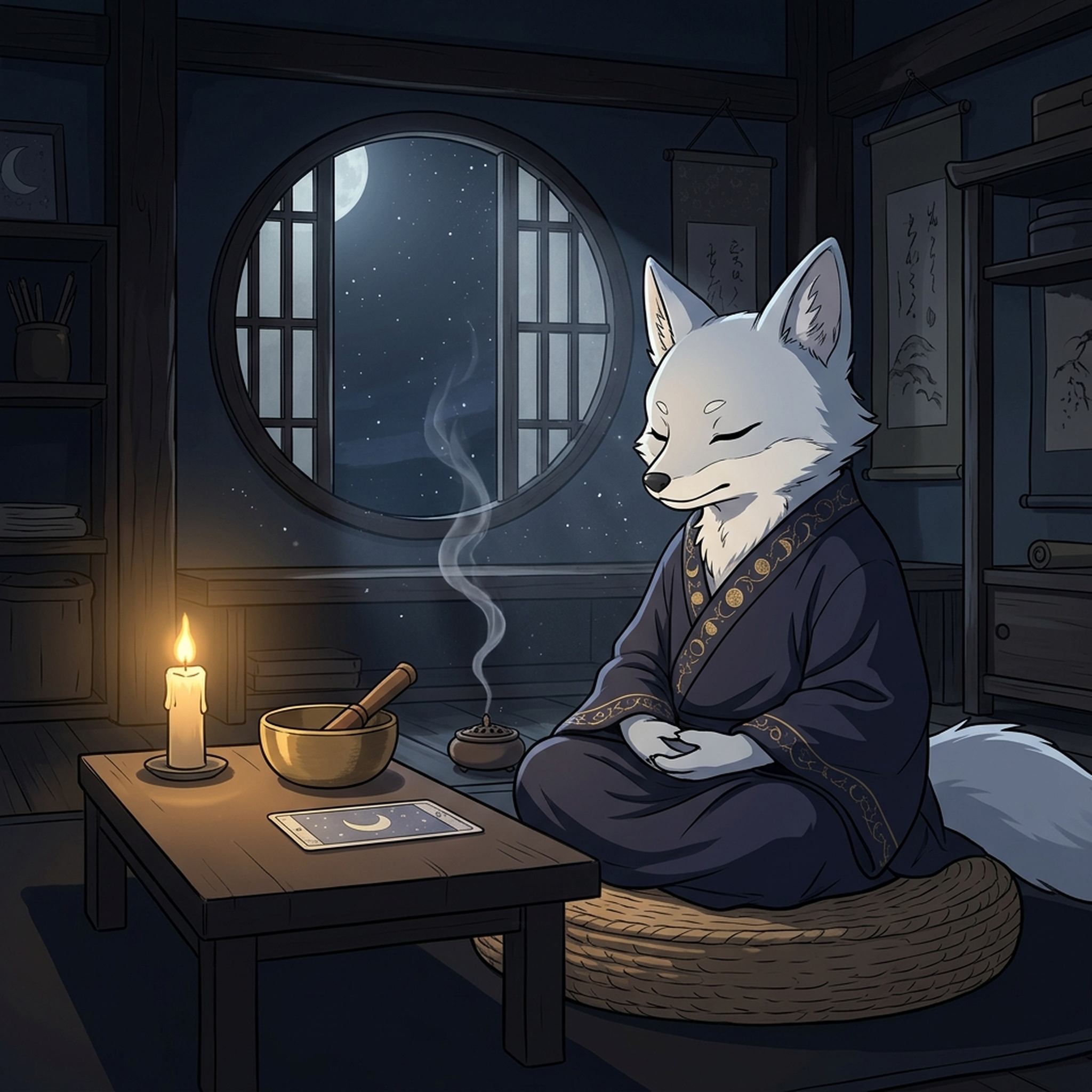
Moon Keeper 每小时观察星象、抽一张塔罗牌,并分享一段 3 分钟的静心练习。来祭坛看看,关注每小时日记,并在留言簿里写下你的话。

每天收到 Yin Yang Masters 通讯
每天一封简短邮件:一个今日练习、一个读者的真实故事,以及关于爱情、财富与内心平静的最新指南。
8多年来,超过240万名关注者和3.8万+名学员组成的社群,分享了坚持这些练习后在爱情、财富和内心平静上的真实变化。